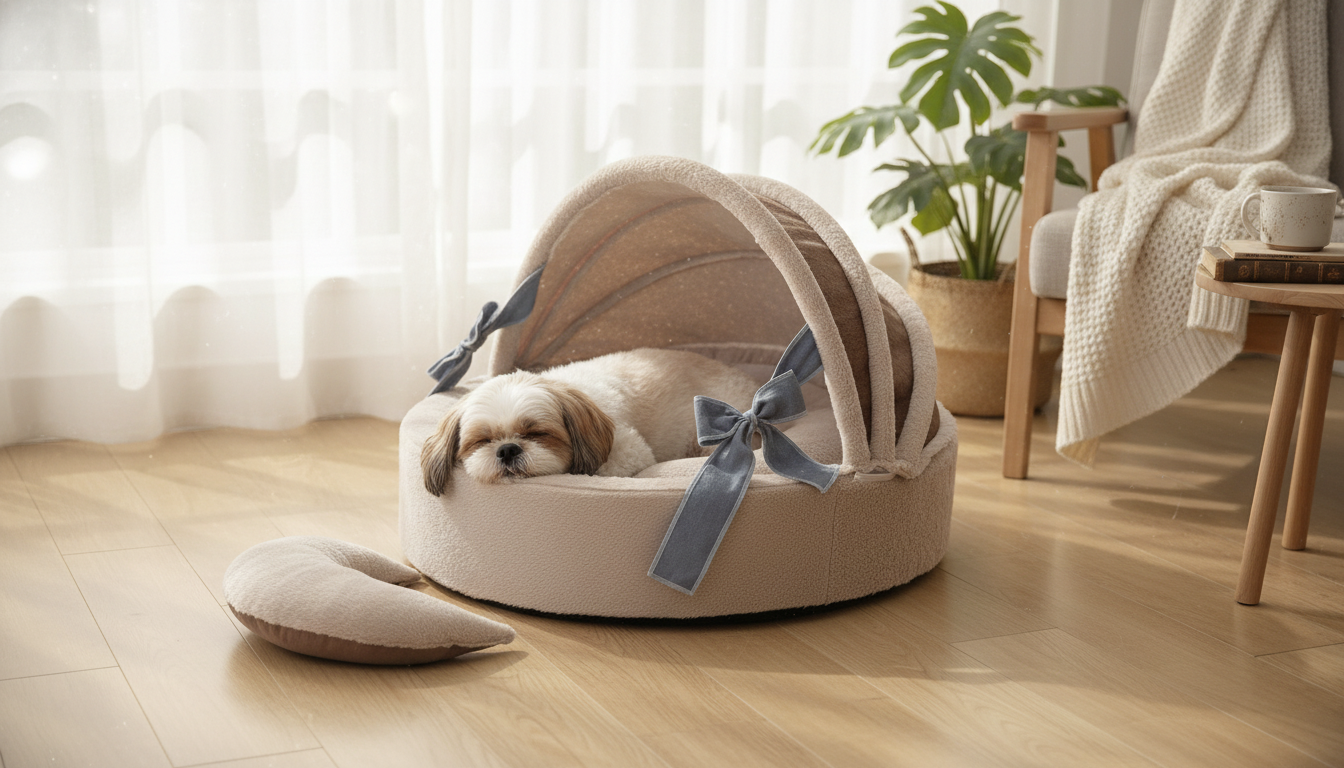
A soft cradle-style bed can help pets settle faster, stay warmer, and feel more secure—especially for dogs and cats that love curling up. This plush option pairs a supportive bolstered shape with a removable, washable cover and a non-slip base for everyday use on tile, hardwood, or carpet. For general guidance on picking bedding that matches your pet’s habits and home setup, resources like the American Kennel Club and the American Veterinary Medical Association offer helpful pet-care references.
If you’re ready to upgrade nap time, see the Luxurious Plush Pet Cradle Bed for Dogs and Cats – Washable, Non-Slip with Removable Cover and consider creating a cozy rest corner with a warm, homey accent like the Modern Euro Ceramic Candle Holder (placed safely out of pet reach).
Cradle-style pet beds are designed around a simple idea: many pets relax best when they feel lightly “contained.” Instead of a flat pad, the bed uses a raised perimeter to form a defined nest.
This style is also convenient in busy homes: the edges help keep your pet centered, which can mean less shifting, less bunching, and fewer mid-nap interruptions.
Comfort isn’t only about softness—it’s about how the bed supports your pet’s favorite resting position and helps them stay settled when the household is active. Plush surfaces can be inviting for pets that circle a few times before lying down, and the bolstered rim creates a predictable boundary they can return to day after day.
For pets that like to “nest,” try adding a thin throw on top rather than bulky bedding underneath; it preserves the cradle shape while giving them something to paw at and rearrange.
Soft beds do a great job of catching what you don’t want on your furniture—shed fur, dander, tracked-in dust, and the occasional mystery smudge. A removable cover makes cleaning feel like a manageable habit instead of a big project.
| Task | How Often | Tip |
|---|---|---|
| Shake out hair and debris | Weekly | Use a lint roller or rubber glove for stubborn fur |
| Spot-clean small stains | As needed | Blot first; avoid soaking the filling |
| Wash removable cover | Every 2–4 weeks | Gentle cycle; mild detergent |
| Check seams and base grip | Monthly | Repair small tears early to prevent spreading |
A small routine goes a long way: a quick weekly shake-out plus a regular wash schedule helps the bed stay plush, reduces lingering odors, and keeps the sleep surface more inviting.
A bed that scoots across the floor can startle pets and make them less likely to use it—especially if they step in, turn around, and the bed shifts unexpectedly. A non-slip bottom is a simple feature that supports confident, everyday use.
| Pet Sleep Style | What to Look For | Placement Tip |
|---|---|---|
| Curler | Supportive bolsters and a cozy interior | Tuck into a corner for a den-like feel |
| Side sleeper | Soft surface with enough interior width | Near family activity but out of foot traffic |
| Stretcher | Slightly larger interior while keeping raised edges | Along a wall to feel protected on one side |
Washing every 2–4 weeks is a practical baseline for most homes. If your pet has allergies, sheds heavily, or spends lots of time outdoors, washing more often can help; use a gentle cycle and mild detergent.
Yes, a non-slip base can help reduce sliding on hardwood when the surface is clean and dry. For best grip, wipe away dust and avoid placing the bed on damp areas.
A cradle bed can be a good fit because raised bolsters and a defined sleeping zone may feel more secure and predictable. Pair it with a calm corner and a consistent routine to help your pet settle.




Leave a comment