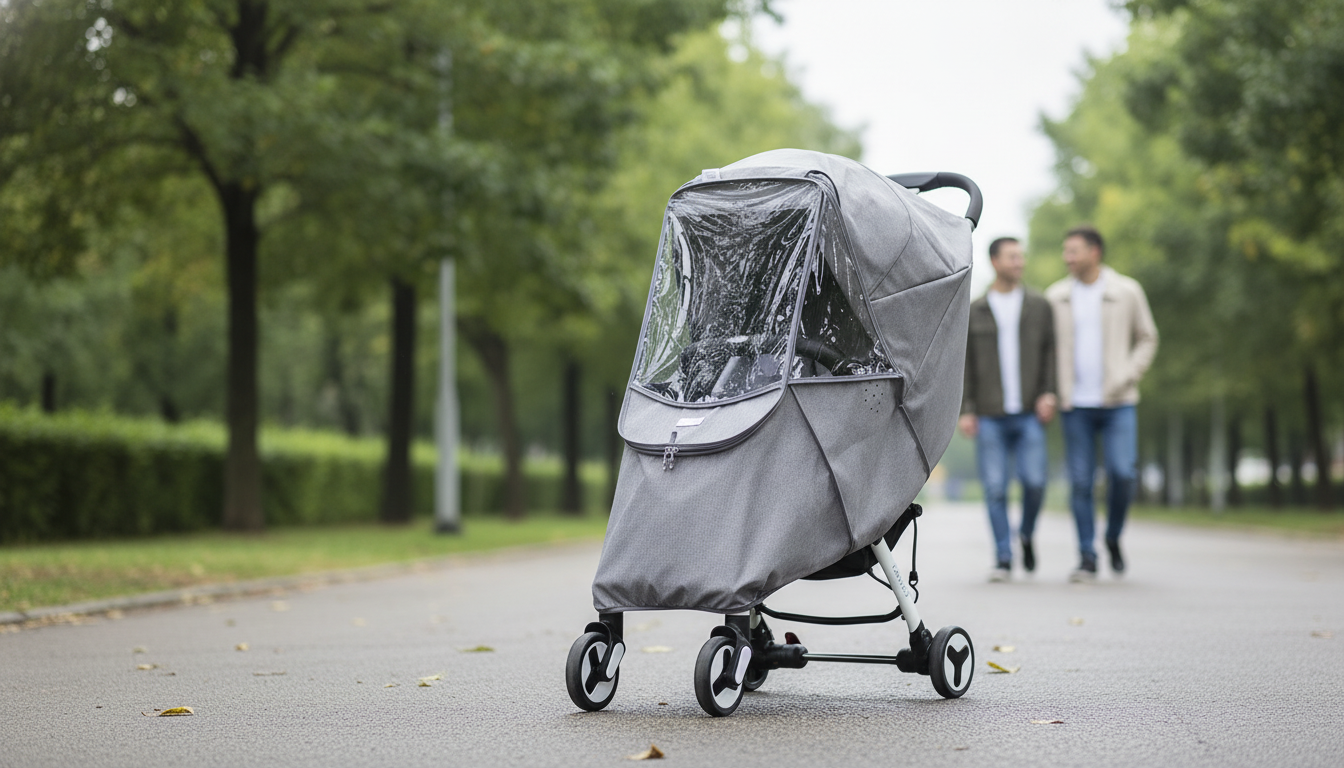
Sudden drizzle, gusty sidewalks, and dusty paths can turn a calm walk into an uncomfortable ride. A well-fitting stroller cover helps keep baby dry, blocks wind, and reduces exposure to road dust—while still allowing airflow and visibility. This guide explains what to look for, how to fit it correctly, and how to use a windowed shield safely in changing weather.
A stroller rain-and-wind cover works best when it behaves like a stable “shell” over the seat area rather than a loose sheet that flaps and shifts. When installed correctly, it can:
Even with a cover, comfort still depends on safe airflow and appropriate clothing. The American Academy of Pediatrics offers practical weather safety guidance for infants and children at HealthyChildren.org.
Some outings are more likely to include wind-driven spray, gritty air, or quick weather changes. A windowed cover can be especially useful for:
On warmer days, pay extra attention to heat buildup. The CDC’s extreme heat guidance is a helpful reference for avoiding overheating during hot weather: CDC Extreme Heat.
“Universal” typically means the cover is shaped to fit many common stroller frames, not every model ever made. Before the first real outing, do a dry run at home so adjustments feel easy when the weather turns.
| Checkpoint | What to look for | Why it matters |
|---|---|---|
| Wheel clearance | Cover fabric stays away from wheels and axles | Prevents rubbing, tearing, and sudden stops |
| Brake access | Brakes can be engaged/disengaged without snagging | Maintains safe stopping control |
| Canopy alignment | Top edge sits evenly and doesn’t collapse the canopy | Reduces water pooling and improves stability |
| Window placement | Viewing window sits at baby’s head/torso line | Easier check-ins and better visibility |
| Ventilation gap | No airtight seal around face area; airflow paths remain | Helps prevent overheating and fogging |
A clear window is more than a convenience—it supports safer monitoring and helps reduce the temptation to “seal everything shut.” For safer day-to-day use:
If condensation builds quickly, treat it as a signal to increase ventilation and reassess layering—not as something to ignore until you get home.
A cover blocks windchill, which can make baby feel warmer than expected. The goal is to keep baby comfortably warm and dry without trapping too much heat.
Many “universal” covers fit common umbrella and full-size stroller shapes, but not every frame and canopy layout. Check the opening around the handlebar/canopy, confirm seat width coverage, and make sure the fabric stays clear of wheels and brakes by doing a test install and a short push before using it with baby.
Keep airflow paths open, and open the window flap when weather allows to vent warm, moist air. Avoid overheating from heavy layers, and pause to wipe the inside if fogging builds while continuing to monitor baby’s comfort.
It can help block wind when it’s secured snugly and kept away from wheels and brake pedals. Tighten attachment points to reduce flapping, and stop to adjust or remove the cover if gusts affect stroller control or visibility.



Leave a comment