A calmer home rarely comes from one big clean-up—it comes from repeatable systems that make clutter and chaos less likely to return. When your space is easier to reset, your brain has fewer loose ends to track, which can lower the daily stress load. (For a helpful overview of how stress affects the body and why small changes matter, see resources from the American Psychological Association and the CDC.)
Calm doesn’t mean spotless. It means your home works the way your day works—especially on the busiest days.
Simple systems are a blend of layout and behavior. When the setup is clear, tidying becomes mostly automatic.
A quick way to spot friction: walk your home once at night and notice the items that “collect” in the same places. Those piles are data—your systems are asking to be simplified.
The goal is not to finish everything. The goal is to prevent tomorrow’s stress from borrowing time from tomorrow’s schedule.
| Time available | Priority tasks | What to ignore (for now) |
|---|---|---|
| 5 minutes | Trash/recycling sweep; clear one surface; start dishwasher | Sorting papers; deep cleaning; reorganizing drawers |
| 10 minutes | Surface reset in two rooms; “belongs elsewhere” bin; quick floor pickup | Closet edits; donation decisions; cabinet reshuffles |
| 15 minutes | Entry drop zone; kitchen counter reset; laundry micro-step; set up tomorrow essentials | Sentimental items; project organizing; detailed labeling |
Room systems work best when they’re specific, visible, and easy enough for everyone to follow without a reminder.
If stress is high, prioritize “visual calm” first (counters, floors, and the entry). According to the Mayo Clinic, stress management works best with practical, repeatable coping steps—small household routines can be one of those steady supports.
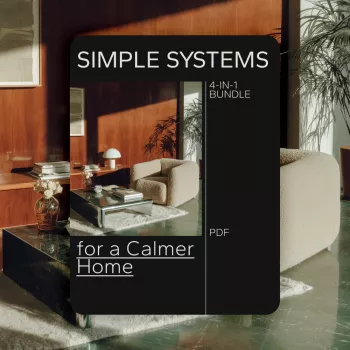
When you want structure without overthinking it, a ready-made set of routines and checklists can help you move from “knowing” to “doing.” The Simple Systems for a Calmer Home: Organize for Less Stress with Guides, eBooks & Checklists focuses on easy-to-maintain zones, quick resets, and decision-light decluttering so the home stays steady even when the week isn’t.
For a calmer feel once the basics are in place, consider small “finish touches” that don’t create clutter—like a single decorative accent on a cleared surface. A minimal piece such as the Modern Euro Ceramic Candle Holder can reinforce the “clear surface” habit by making the space look intentionally done. And if layout stress contributes to visual noise, the AI-Powered Solutions for Balanced Furniture Placement | 3-in-1 Bundle of Guides, eBooks, and Checklists can help simplify how a room functions so tidying is easier to maintain.
Quick wins often show up in 1–3 days when you set up one hotspot like the entry or kitchen counter. More noticeable stability usually takes 2–4 weeks as daily resets and a weekly checklist turn into a rhythm.
Make the system easier than the alternative: visible drop zones, fewer steps, and clear labels. A shared nightly reset under 10 minutes helps everyone participate without it feeling like a big project.
No—declutter first so you know the real categories and quantities. Use temporary bins or boxes, then buy containers only after the system is working and you want a cleaner, more durable setup.





Leave a comment