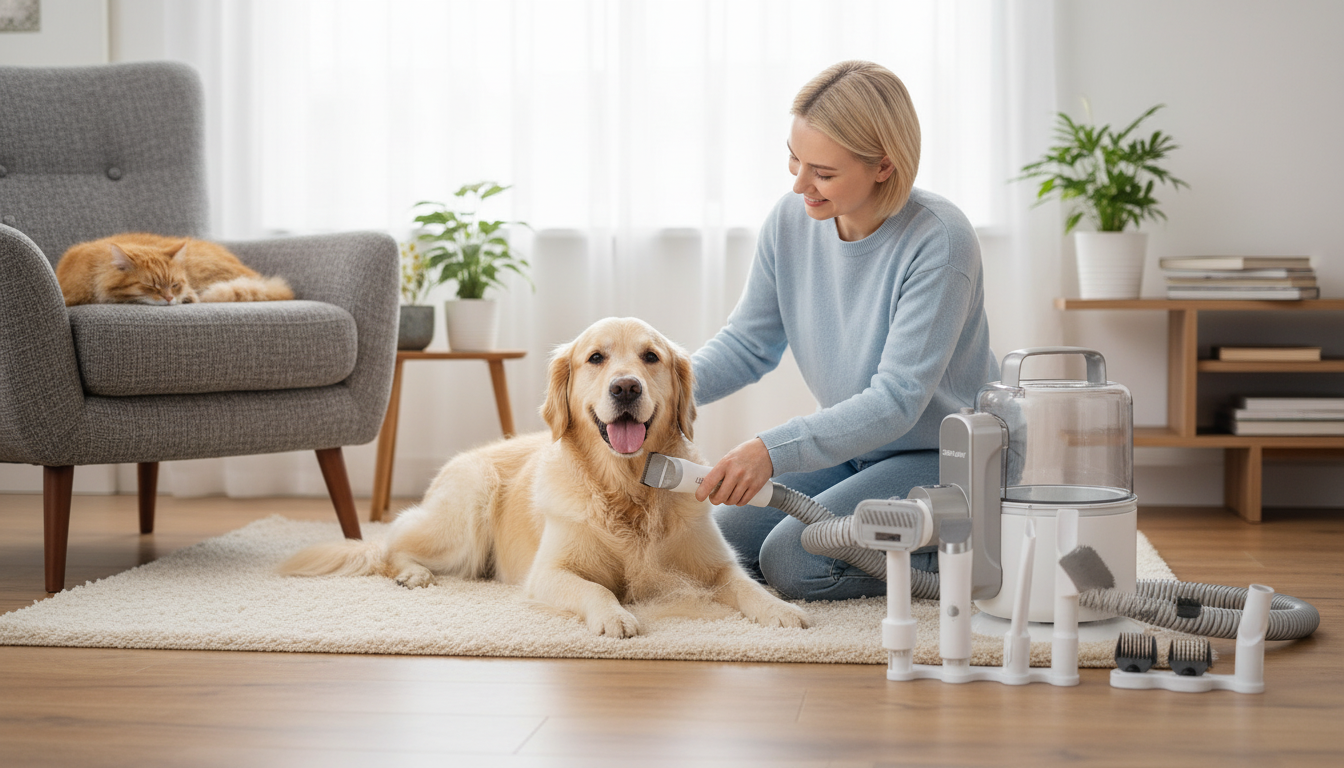
Shedding can turn daily pet life into a constant cycle of sweeping, lint-rolling, and vacuuming furniture. A grooming vacuum kit tackles the mess at the source by collecting loose coat as brushing happens, helping keep floors clearer while making coat care more consistent. This guide covers what a grooming vacuum kit does, who it suits best, how to use it comfortably, and how to maintain it for reliable at-home grooming sessions.
A grooming vacuum kit combines a familiar brushing motion with gentle suction so fur is captured as it loosens. Instead of hair drifting onto rugs, clinging to clothing, or collecting in corners, it’s directed into a container while you groom.
For general grooming fundamentals and coat-care routines, the American Kennel Club’s dog grooming basics and the ASPCA grooming tips offer helpful guidance on brushing frequency and handling.
Vacuum-assisted grooming shines when shedding is heavy and cleanup feels never-ending—especially in homes with fabric furniture, carpets, or multiple pets. That said, comfort and safety come first; some pets need a slower approach or a different tool entirely.
| Situation | Recommendation |
|---|---|
| Seasonal shedding increase | Use shorter sessions more often; focus on undercoat areas. |
| Pet startles at vacuum noise | Desensitize slowly; start with vacuum off and reward calm behavior. |
| Mats close to skin | Avoid pulling; use a dematting approach or professional help. |
| Sensitive or irritated skin | Use minimal pressure; stop if redness increases. |
| Senior pets with limited tolerance | Frequent micro-sessions (2–5 minutes) with breaks. |
If your pet is likely to wriggle, back away, or guard certain areas (like paws or belly), review calm handling principles before you begin. Cornell’s veterinary guidance on handling and restraint can help you prioritize safety and reduce stress.
Not all kits feel the same in use. The best setup is the one your pet will tolerate consistently, so comfort-focused design features matter as much as suction power.
A calm routine is often the difference between “this is impossible” and “this is our new normal.” Aim for cooperation, not perfection, and stop early if your pet’s stress signals ramp up.
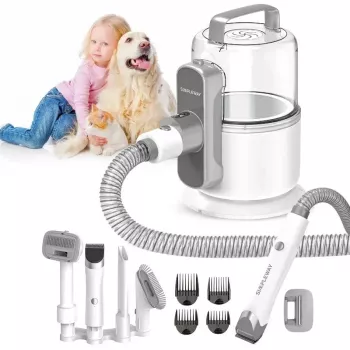
If you want to catch shedding at the source while you brush, the Ultimate Pet Grooming Vacuum Kit: Deshedding Tool for Dogs & Cats is built for tidier at-home sessions.
| Item | Detail |
|---|---|
| Name | Ultimate Pet Grooming Vacuum Kit: Deshedding Tool for Dogs & Cats |
| Price | 362.01 USD |
| Availability | In stock |
| Best for | Reducing loose hair mess during brushing; routine coat maintenance |
It’s generally safe when introduced slowly with low suction and short sessions. Avoid forcing the tool on fearful cats, and stop if you see escalating stress signs like hiding, swatting, or rapid breathing.
It depends on coat type and season. Many dogs do best with multiple short sessions each week during heavy shedding, then less frequently once the shed cycle eases.
Reduce suction and check for tangles or mats, then brush in the direction of hair growth. Make sure the tool head is clean, and stop if the skin looks irritated or your pet shows discomfort.




Leave a comment