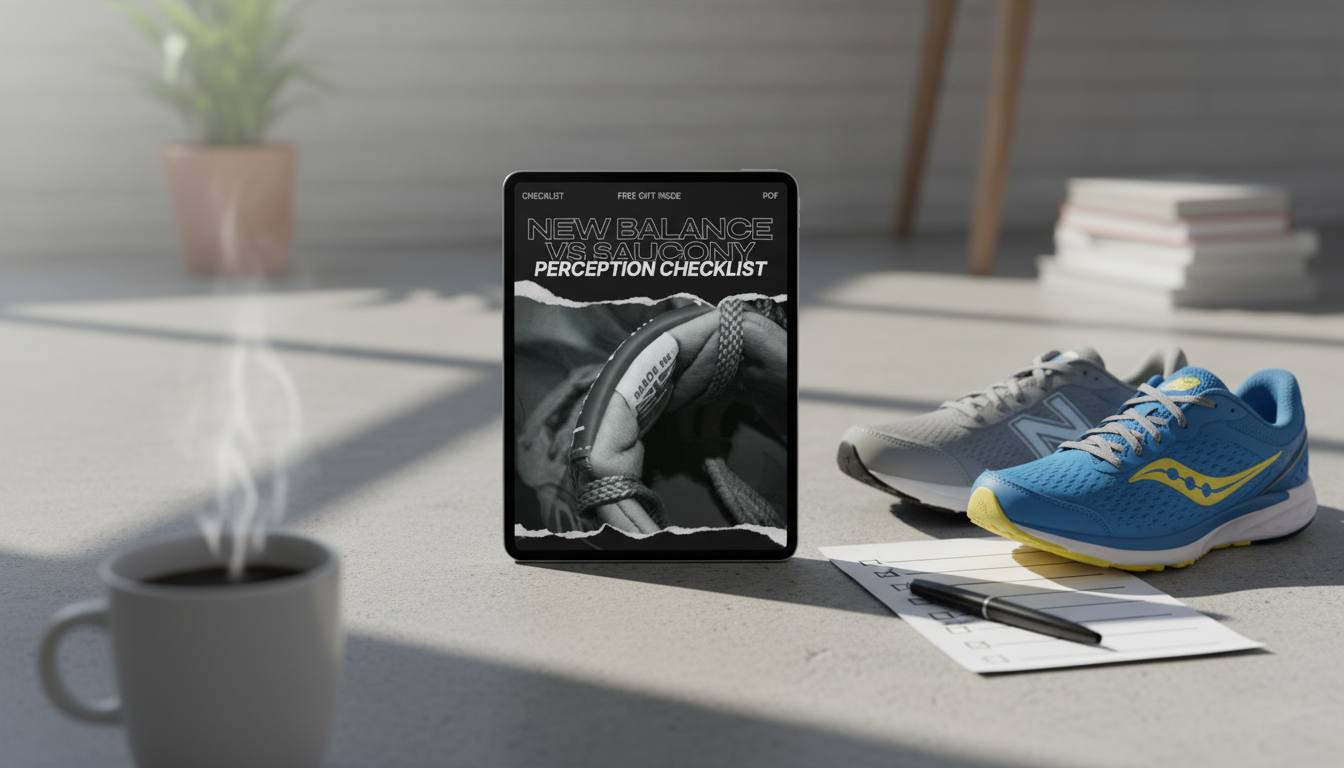
Choosing between New Balance and Saucony usually isn’t a simple “which has more cushioning” decision. Fit quirks, ride character, and even the way a shoe looks on-foot can shape confidence and comfort as much as any spec sheet. The New Balance vs Saucony Perception Checklist (digital download) turns those gut feelings into a quick, repeatable process—so the pair you pick matches how you actually run and how you want the shoe to feel.
Perception is the blend of measurable factors (fit, stability, cushioning) and lived experience (comfort over time, confidence on corners, and whether the shoe feels like “you”). Two models can share similar stack height and weight and still feel completely different because of geometry, midsole tuning, rocker shape, and upper structure.
A checklist helps because it translates a vague reaction—“this one feels better”—into specific, trackable reasons. That clarity matters when you’re comparing multiple pairs back-to-back or trying to remember details after an online delivery.
Brand identity influences expectations before the first step. That doesn’t mean style should decide everything, but it can help narrow the field—and it often affects whether a shoe becomes a go-to daily pick.
If you want a baseline look at each brand’s current running lineup, you can browse New Balance Running and Saucony Running Shoes to see how their design cues and product categories compare.
Instead of chasing numbers, focus on how the shoe behaves when you move through your real running patterns. The checklist is built around practical “feel tests” you can repeat anywhere.
For a model-by-model view from a long-running review outlet, Runner’s World shoe reviews can help you sanity-check categories (daily trainer, stability, speed, etc.)—then use your own try-on scoring to decide what actually works for your feet.
Use the table below as a fast first pass. The downloadable version expands each checkpoint into guided prompts and a simple scoring process you can reuse whenever you’re comparing pairs. If two options tie, prioritize fit security and comfort over lab-style comparisons.
| Checkpoint | What to notice during try-on | What it suggests you should buy |
|---|---|---|
| Toe box comfort | Toe splay without pressure; no rubbing on the big toe joint | Choose the model/brand that stays comfortable at 30–60 minutes |
| Midfoot lock-in | No sliding on turns; laces don’t need over-tightening | Better for tempo runs and confident cornering |
| Heel security | Minimal heel lift on incline walking/jogging | Better for longer runs and blister prevention |
| Cushioning feel | Soft sink vs springy rebound; how quickly it stabilizes after landing | Match to recovery days (softer) or steady training (balanced) or speed (snappier) |
| Stability under fatigue | Does it wobble when you intentionally land slightly off-axis? | More forgiving choice for high-mileage weeks |
| Versatility | Feels good at walk, easy jog, and moderate pace | Better value as a daily trainer |
Get the printable, phone-friendly file here: New Balance vs Saucony Perception Checklist | Digital Download.
No—neither brand is “better” for everyone. The checklist is designed to match your fit needs, ride preferences, and training use to the shoe choice that feels most reliable.
Yes. Apply the same checkpoints to any New Balance or Saucony model, and use the scoring to compare two (or more) shoes side-by-side.
Yes. Use it to set priorities before you order, then evaluate immediately on delivery during the return window so you can decide quickly and consistently.




Leave a comment