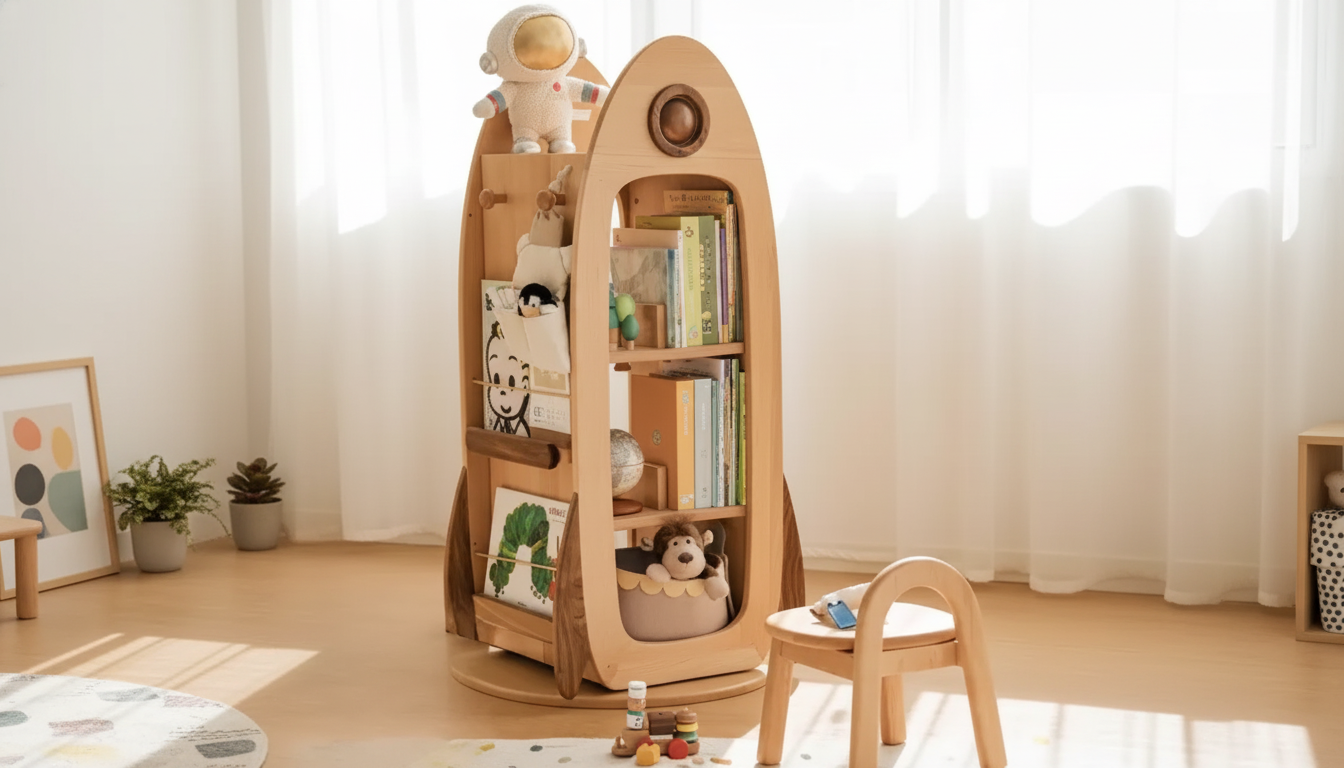
A compact home can still feel calm, organized, and design-forward with the right storage. A mid-century inspired bookcase with cubbies pulls double duty—displaying books and decor up top while keeping toys, games, and bins contained below—without visually crowding the room. The result is a “one piece, many jobs” solution that reads more like furniture than a pile of organizers.
If you’re looking for a streamlined option built for tight layouts, the Mid-Century Modern Bookcase & Toy Storage Cubby for Small Spaces is an easy anchor piece: clean lines, open shelving, and practical cubes that help daily messes disappear fast.
Small spaces don’t just need more storage—they need smarter storage. A mixed bookcase-and-cubby design keeps the items you want to see accessible while giving the messiest categories a defined “home.”
In practice, that means fewer visual interruptions. Instead of three different storage pieces fighting for attention, one cohesive unit holds the whole routine—books, bins, and the everyday “where do we put this?” items.
Mid-century modern is less about ornate decoration and more about proportion, warmth, and restraint—ideal for smaller rooms where every object takes up visual space.
To keep the vibe authentic, aim for a curated top half: a short stack of books, one framed photo, and a basket that “softens” the lines. For a little design context, MoMA’s collection highlights the era’s emphasis on clean forms and functional beauty (MoMA Design collection).
The best placement is wherever it replaces multiple smaller organizers. Start by identifying the area where clutter tends to land, then assign the unit a clear job.
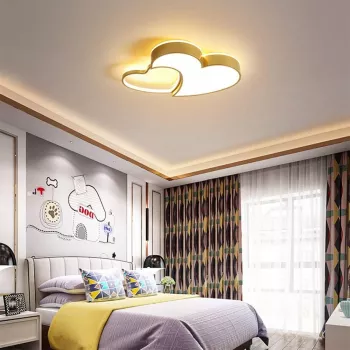
Lighting also affects how “heavy” storage feels. A bright, well-lit corner looks more open, even with a full unit. If the area needs an upgrade, a ceiling fixture like the Modern Nordic LED Ceiling Lamp – Art Deco Lighting for Home Decor can help the storage zone feel intentional rather than improvised.
Before buying bins or committing to a layout, take a quick inventory. The goal is to match storage volume to real categories, not wishful thinking.
| Space | Best use of open shelves | Best use of cubbies | Add-on organizers |
|---|---|---|---|
| Studio / apartment corner | A few books + a lamp + 1 decor piece | Soft bins for mixed toys | Labels + one lidded basket |
| Small kids’ bedroom | Bedtime books + trophy shelf | Daily toy rotation by category | Fabric cubes + picture labels |
| Shared living room | Coffee-table books + framed photos | Games, remotes, kids’ crafts | Matching baskets to reduce visual clutter |
| Home office + play zone | Work binders + printer supplies | Craft bins + building sets | A “project tray” per child |
Any tall or heavily loaded storage should be treated as a safety item—not just a décor choice—especially in homes with kids.
For clear, practical guidance, review the U.S. Consumer Product Safety Commission’s tip-over information (CPSC Furniture Tip-Over Information). For those who like standards-based details, the stability benchmark for clothing storage units is outlined in ASTM F2057 (ASTM F2057-23).
Yes—when each cubby is assigned a category and paired with bins or baskets. The biggest difference comes from limiting “miscellaneous” cubbies and keeping the most-used items at reachable heights.
Anchoring is strongly recommended for stability and tip-over prevention, especially when children can pull on shelves or climb. Follow the included hardware instructions and use studs or appropriate wall anchors for your wall type.
Put heavier items (large books, games) in lower cubbies, daily-grab toys in the lowest row, and reserve upper open shelves for lighter books and decor. This keeps the unit stable and helps the room look visually balanced.

Leave a comment