
Authenticating Louis Vuitton is rarely about finding one perfect “tell.” Genuine pieces tend to look right as a whole: the silhouette holds its shape, the bag feels balanced in the hand, and details appear consistent rather than patched together. Before zooming into stamps and codes, step back and assess overall quality—structure, symmetry, and clean finishing are typically dependable on authentic items.
Next, confirm that the design details match the exact model and approximate era. Louis Vuitton updates materials, lining, hardware finishes, and even construction methods over time, so a mismatch (like the wrong interior style for a given model) can be a bigger red flag than a single sloppy stitch. Finally, look for harmony across components: canvas, leather trim, edge glazing, stitching color, and hardware tone should make sense together. Use multiple checks and weigh them collectively.
Start with what your senses can confirm quickly. Louis Vuitton coated canvas usually feels substantial and consistent—firm rather than thin, overly plasticky, or gummy. If the canvas ripples strangely, feels sticky, or looks like it has an uneven surface coating, note it for later comparison against other signs.
If your piece uses vachetta (untreated natural leather) trim, it typically begins pale and develops a gradual patina through light, oxygen, and handling. Abrupt darkening, oddly uniform “painted” color, harsh dye lines, or a plastic-like sheen can signal issues—though heavy cleaning or conditioning can also affect appearance.
Edge glazing (the sealed paint along edges) often tells an honesty story. Clean, even edges are more typical, while messy drips, immediate cracking, or tacky residue can be concerning. Smell can provide context (chemicals, smoke, storage), but it’s not definitive—authentic items can pick up odors, and counterfeit items can be aired out.
| Area | What to observe | Notes to record |
|---|---|---|
| Coated canvas | Even grain/print, consistent thickness, firm hand-feel | Any rippling, tackiness, or unusually thin spots |
| Leather trim | Natural patina progression; no harsh dye lines | Color uniformity, dryness, cracking, staining |
| Edge glazing | Smooth, even edges; minimal bubbling | Sticky feel, chipping, uneven paint |
Pattern alignment is one of the fastest “sanity checks,” but it must be model-specific. On many monogram pieces, motifs align thoughtfully across seams and appear balanced on the front and back. Drastic misalignment, awkwardly cropped symbols, or corners that look randomly cut can be suspicious—unless the authentic design for that model naturally creates those quirks.
Pay special attention to seams, corners, and transitions where canvas wraps around. Ask whether the pattern placement looks intentional. Also confirm logo orientation: some designs use a single piece of canvas that wraps around the bag, which can result in an upside-down monogram on one side. That can be normal for certain models, so the right move is to compare against multiple reputable reference photos of the exact model and approximate year—not just a “similar” bag.
Louis Vuitton stitching is generally neat: straight lines, consistent spacing, and even tension. Wavy lines, skipped stitches, and uneven spacing—especially in multiple areas—are warning signs. Don’t stop at the easiest-to-photograph parts, either; check stress points where shortcuts show up first.
Focus on handle bases, strap anchors, corners, and zipper ends. These zones should look reinforced and cleanly finished. Also note thread color consistency. Thread often contrasts on vachetta areas, but it shouldn’t look randomly mixed, unusually fuzzy, or messy around turns.
| Check | What “clean” looks like | Red flags |
|---|---|---|
| Finish | Even tone, minimal pitting | Flaking, bubbly plating, patchy color |
| Engraving | Crisp lines, consistent font | Blurry letters, odd spacing, shallow marks |
| Function | Smooth zips, firm closures | Sticking, misaligned clasp, loose parts |
For brand references and model details, consult the Louis Vuitton Official Website. If you want an additional layer of verification, professional services and tools like Entrupy may be helpful. For consumer-protection guidance on safer online buying and dispute steps, review resources from the Federal Trade Commission (FTC).
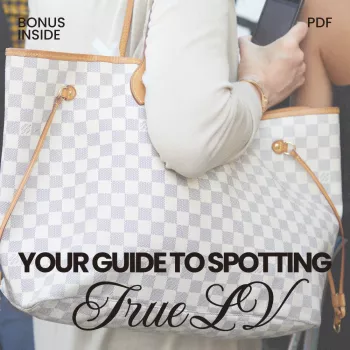
If you want a simple one-page reference that’s easy to print or save to your phone, see Your Guide to Spotting True LV: How to Recognize Louis Vuitton Style – Printable Checklist.
For shoppers who like keeping purchase decisions organized across categories (photos to request, notes to record, and post-purchase placement/storage planning), you may also find AI-Powered Solutions for Balanced Furniture Placement | 3-in-1 Bundle of Guides, eBooks, and Checklists useful as a general-purpose checklist system.
| Category | Pass / Unsure / Flag | What was observed |
|---|---|---|
| Materials & glazing | ||
| Pattern alignment | ||
| Stitching & construction | ||
| Hardware & engravings | ||
| Stamps / codes | ||
| Seller terms & provenance |
No—date codes (when present) can support an expected timeframe and format, but they aren’t definitive proof because formats vary by year and counterfeits can copy them. Use date codes as one data point alongside materials, construction, and seller documentation, or consider a professional authenticator for high-stakes purchases.
No—some models use a single piece of canvas that wraps around the bag, which can result in an inverted monogram on one side. Confirm what’s normal for the specific model and year by comparing to multiple reputable references.
Request clear, high-resolution photos of the front and back, corners, stitching close-ups, hardware engravings, zipper pull, heat stamp, interior lining/label, and any visible codes. Ask for straight-on angles in good lighting so spacing, fonts, and alignment can be evaluated.






Leave a comment