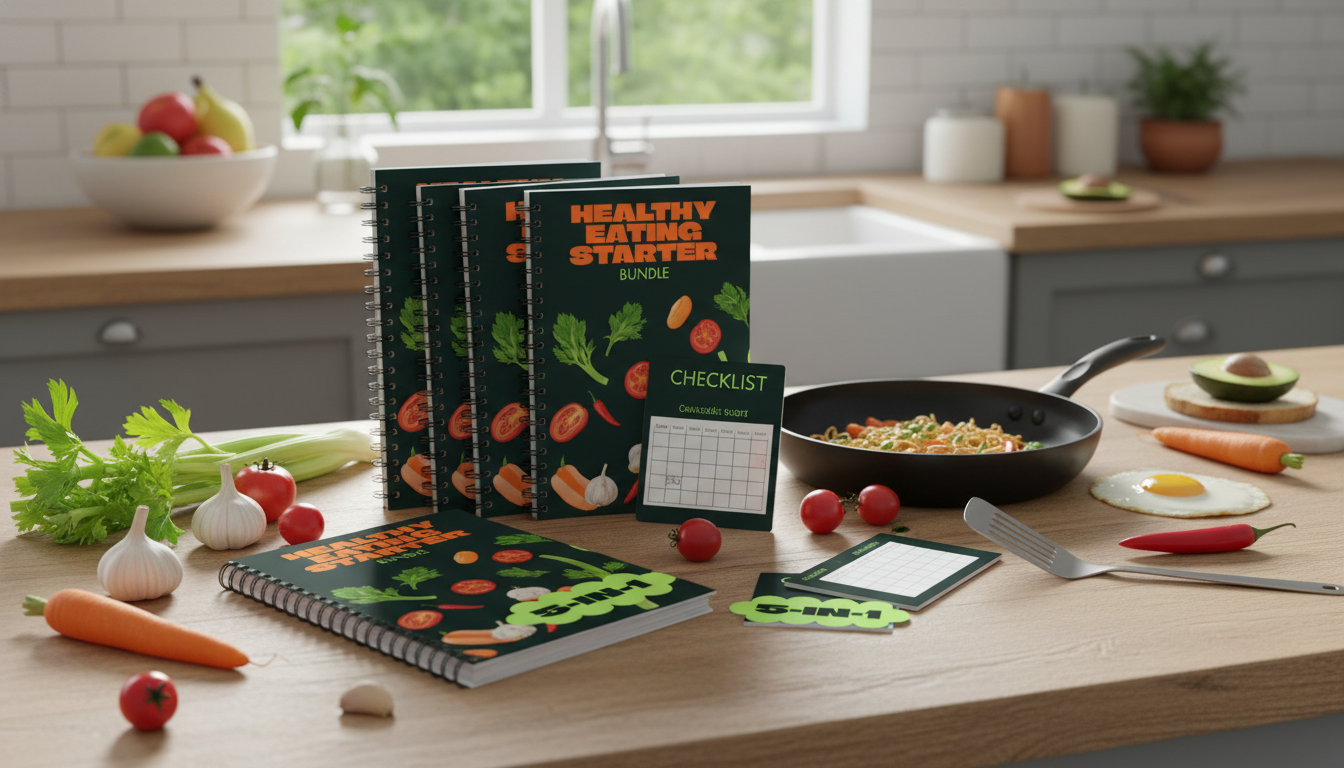
Starting a healthier way of eating is easier when the next step is clear. The Healthy Eating Starter Bundle | 5-in-1 Digital Guides & Checklists for a Healthy Diet is built for momentum: practical guides, checklists, and planning tools that turn nutrition goals into small daily actions. Instead of trying to overhaul everything at once, you’ll use a lightweight system that reduces decision fatigue, supports consistency, and helps you keep meals balanced without perfection.
The structure aligns with widely accepted guidance: focus on nutrient-dense foods, build balanced plates, and make healthy choices the default through planning and a supportive food environment. For reference, see the Dietary Guidelines for Americans (2020–2025) and the plate-model approach from the Harvard T.H. Chan School of Public Health Healthy Eating Plate.
This bundle is designed like a “do this next” toolkit. Each component supports one part of the routine—planning, shopping, building balanced meals, and tracking what’s working—so your week runs with fewer last-minute decisions.
| Component | Primary focus | How it’s used | Best for |
|---|---|---|---|
| Getting-started guide | Foundational habits | Follow in order during the first week or two | New starters who want clarity |
| Meal planning checklist | Planning meals and snacks | Complete once per week before shopping | Reducing last-minute food decisions |
| Grocery list checklist | Smarter shopping | Use in-store or for online carts | Building a healthier pantry and fridge |
| Balanced plate / portion guide | Meal balance | Reference during cooking or ordering out | Improving meal quality without strict dieting |
| Progress tracker | Consistency and reflection | Quick daily/weekly check-ins | Staying on track and spotting patterns |
The fastest wins come from choosing a few basics, repeating them, and only upgrading after the routine is stable. A two-week ramp-up keeps the process realistic and lowers the “all-or-nothing” pressure.
Tip: keep your “first week” meals intentionally boring. Repetition is a feature here—once shopping and prep feel easier, variety becomes simple to layer in.
Balanced meals don’t require strict dieting rules. A dependable template helps you feel satisfied, steady your energy, and avoid the snack-spiral that often follows under-built meals.
If your environment is part of the challenge, small home-setup improvements can help routines stick (a clear counter for prep, a consistent “snack bin,” a dedicated planning spot). For a structured way to organize spaces so your habits feel more automatic, consider pairing your nutrition routine with AI-Powered Solutions for Balanced Furniture Placement | 3-in-1 Bundle of Guides, eBooks, and Checklists.
Yes. It’s designed as a step-by-step starting point with checklists and templates, so you can follow a simple order of operations instead of guessing. For week one, start with just 2–3 core habits and build from there.
Yes. The structure stays the same while the food choices can be swapped within the same categories (protein, fiber-rich carbs, produce, and healthy fats). If you have medical needs or complex restrictions, use the framework while confirming food choices with a qualified professional.
Most people can plan and build a grocery list in about 20–45 minutes per week. It typically gets faster once you repeat a few “default meals” and keep a steady set of staples on hand.




Leave a comment