
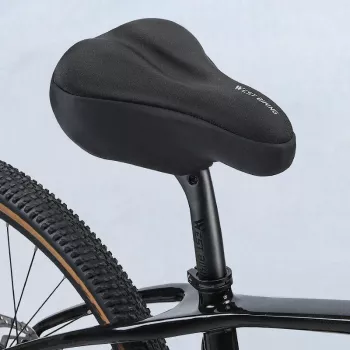
A seat cushion can make the difference between cutting a ride short and staying comfortable through commutes, errands, or longer weekend loops. This soft memory foam bike seat cushion uses a drawstring-style fit to help it stay in place while adding padding where riders commonly feel pressure on the saddle.
Some comfort upgrades require swapping parts or committing to a whole new saddle. A slip-on cushion, by contrast, is a quick change that can be removed anytime—handy if you share a bike, switch between outdoor and indoor rides, or want a reversible fix while dialing in fit.
On the road or on a stationary bike, discomfort often comes from concentrated pressure and friction. A well-fitted cushion can soften the feel of a firm saddle and make the contact patch more forgiving—especially during steady-cadence riding where you stay seated for long stretches.
Comfort is also highly personal. If a saddle is the wrong shape or width for your anatomy, padding alone may not solve the issue. General bike-fit guidance from reputable sources can help you spot the difference between “needs a little cushioning” and “needs a fit change” (see Cleveland Clinic’s bike fit overview and REI’s bike fit basics).
A drawstring-style closure is designed to cinch the cover under the saddle, reducing side-to-side movement that can cause bunching or chafing. Taking two minutes to install carefully makes a noticeable difference in stability.
Tip: After you tighten it, press down on the cushion and try to twist it gently. If it rotates easily, loosen slightly, re-center it, and cinch again with even tension so the material hugs the underside uniformly.
A cushion is often a great “first step” when the bike feels simply too firm. It can also be a practical solution for bikes that aren’t perfectly set up for you—like a guest bike, a shared bike, or a trainer bike.
For a deeper explanation of how saddle choice affects comfort, Harvard Health Publishing offers practical guidance on selecting a bicycle seat: Choosing a bicycle seat.
Foams and covers last longer when they’re kept clean and allowed to dry. This matters even more for indoor cycling, where sweat can build up quickly during repeated sessions.
Use this checklist to compare comfort add-ons and confirm compatibility before purchase.
| Item to check | Why it matters | What to do |
|---|---|---|
| Saddle shape (wide vs narrow) | A close match reduces shifting and bunching | Choose the closest fit; center carefully before tightening |
| Riding posture (upright vs leaned-forward) | Changes where pressure concentrates | Upright riders often benefit most from added padding |
| Stability after installation | A sliding cover can cause chafing | Tighten drawstring evenly; re-check after first ride |
| Seat height after adding cushion | Extra thickness can raise hip position | Lower seat slightly if leg extension feels too long |
| Moisture management | Sweat and rain can shorten lifespan | Air dry after rides; wipe down regularly |
Drawstring designs are adaptable across many common saddle shapes because they cinch under the seat for a snug hold. Very wide cruiser saddles or very narrow race saddles may require extra careful centering, and it’s important to confirm the cover doesn’t interfere with rails or any under-saddle mounts.
Yes. Any added padding increases effective saddle height, so a small seatpost adjustment may be needed. After installing, do a short test ride and confirm comfortable leg extension without hip rocking.
A cushion is a fast, reversible comfort upgrade that can make a firm seat feel more forgiving right away. If discomfort is tied to saddle width/shape or overall bike fit, a properly sized saddle (plus fit adjustments) is often the better long-term fix.



Leave a comment