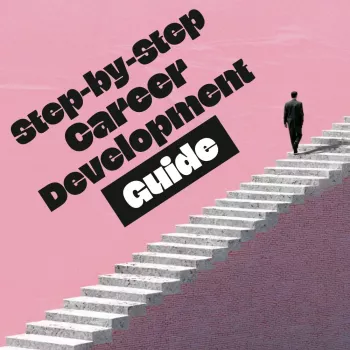
Career progress is rarely about one perfect move. It’s built through repeatable habits: setting direction, building proof of value, communicating it clearly, and staying connected to real opportunities. The system below is designed to help you level up with less guesswork—whether you’re aiming for a promotion, changing fields, or running a calmer, more predictable job search.
Vague goals (“something better”) create scattered effort. A clear target turns career development into a series of manageable weekly actions.
Pick 2–4 job titles you’d accept today, plus the kinds of problems you want to solve (e.g., “reduce churn,” “ship features faster,” “improve close rates”). For role research, use O*NET OnLine to compare common tasks and skills across titles.
Write down non-negotiables: remote/hybrid preferences, compensation range, schedule needs, travel tolerance, and values (like mission, pace, or stability). Constraints don’t limit you—they filter out roles that would quietly drain you.
Higher levels often require different evidence: scope of ownership, leadership, portfolio samples, metrics, certifications, or domain credibility. Scan 10–15 job descriptions and list what keeps repeating.
Keep it simple: where you’re headed, why it fits, and the strengths that support it. This becomes the backbone for your resume summary, LinkedIn “About,” and networking outreach.
Set weekly targets for learning, outreach, and applications that you can sustain. Consistency beats intensity—especially when you’re also working full-time.
Courses and reading are helpful, but hiring decisions are made on proof. Your goal is to turn skill-building into visible outcomes that are easy to explain and hard to ignore.
Rank them by (1) impact on the target role and (2) urgency based on job description frequency. Then convert each skill into a deliverable: a project, case study, process improvement, dashboard, playbook, or measurable result.
Capture measurable signals such as time saved, revenue influenced, error reduction, customer satisfaction, cycle time, or volume handled. Use a simple format: context → action → result → tools/skills used. This makes resume writing faster and interview prep calmer.
| Skill to Strengthen | Proof to Create | Example Resume Bullet Starter |
|---|---|---|
| Stakeholder communication | Monthly update memo + documented meeting outcomes | Aligned cross-functional stakeholders by… resulting in… |
| Process improvement | Before/after workflow with metrics | Reduced cycle time by X% by redesigning… |
| Data analysis | Dashboard or decision memo | Built a dashboard to track… improving… |
| Leadership | Mentoring, training, or project lead scope | Led a team of… to deliver… on time/budget… |
Certifications, publishing, speaking, or volunteering work best when they strengthen your story for a specific target. Avoid collecting credentials that don’t translate into hiring confidence.
Try: 5 warm touches (people you already know), 3 new connections, and 1 informational conversation. Harvard Business Review’s career resources offer practical guidance on relationship-building and professional growth: HBR: Career Planning.
A calm job search is mostly math and rhythm: consistent inputs, good targeting, and fast learning loops. Labor market shifts are real, so keep an eye on broad trends with sources like the U.S. Bureau of Labor Statistics Employment Projections.
If you want a structured, template-driven approach, the Step-by-Step Career Development Guide – Professional Growth, Job Search, Networking & Resume Writing Ebook can be used like a weekly playbook: one module per week (growth plan, resume, networking, job search), done in short sprints of 30–45 minutes.
To make the routine easier to maintain, it helps to build an environment that supports focused work. For a cleaner, calmer desk setup, consider adding a small ambiance piece like the Modern Euro Ceramic Candle Holder. If you’re reworking a home office layout and want a guided, systems-style approach to placement and flow, the AI-Powered Solutions for Balanced Furniture Placement | 3-in-1 Bundle of Guides, eBooks, and Checklists can support a more functional workspace.
Most people see early momentum in 30 days (clear target, updated resume, consistent outreach). A promotion track often takes 3–9 months, while a job change commonly takes 2–6 months depending on market conditions and weekly consistency.
Bridge the gap by targeting adjacent roles, building proof through projects or measurable improvements, and reframing transferable skills around the target role’s success profile. A strong summary and outcome-based bullets can show readiness even when titles don’t perfectly align.
Yes—warm connections and referrals typically improve response rates and speed up feedback loops. A minimal routine (a few warm touches plus one informational conversation per week) complements applications without turning job search into a second full-time job.






Leave a comment