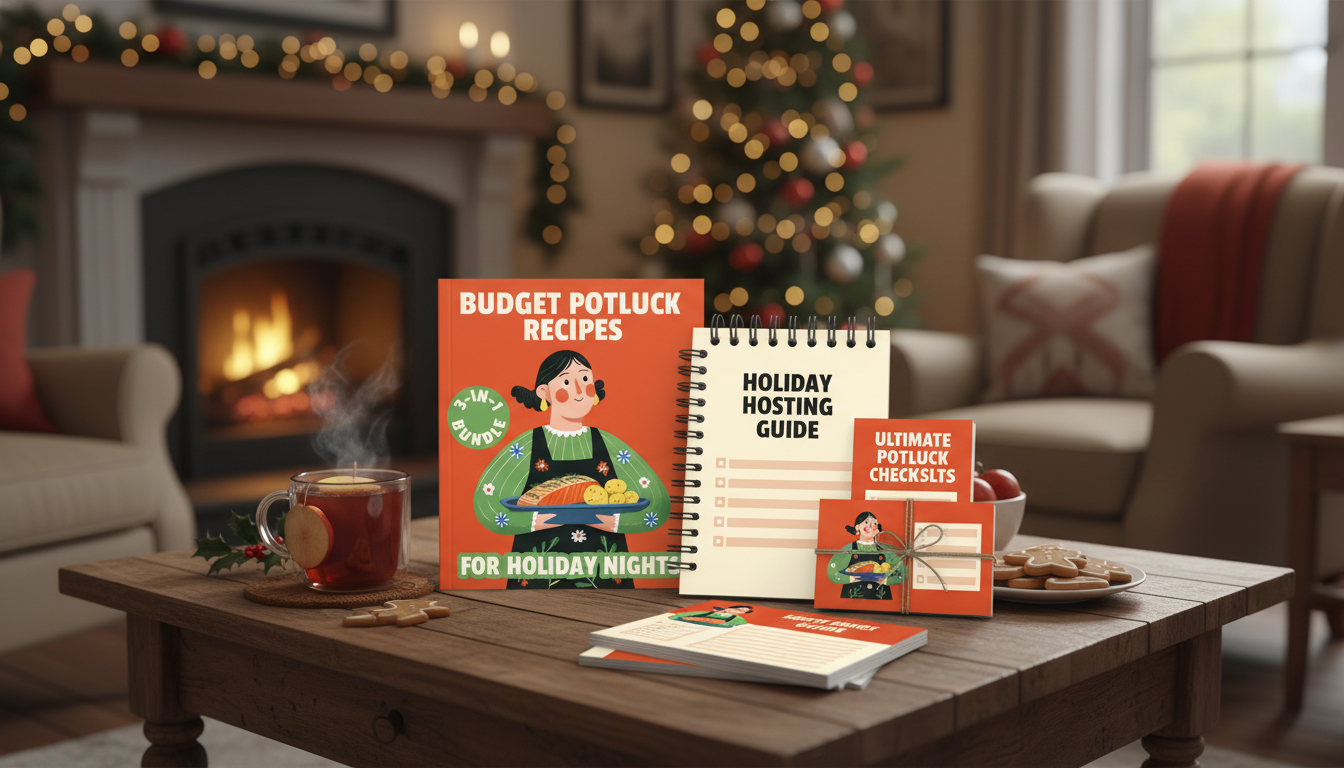
Holiday potlucks feel magical when the logistics stay simple: a clear menu, smart assignments, a reliable timeline, and a few safety rules everyone can follow. A bundle built for potluck planning helps organize the whole night—before, during, and after—so hosts and guests can contribute confidently while keeping costs under control.
Potlucks usually go sideways for predictable reasons: unclear expectations, missing tools, and too many last-minute “I’ll grab something on the way” purchases. A structured potluck plan brings calm to the chaos by:
If you want a single reference that keeps the group aligned, start with the Budget Potluck Bundle for Holiday Nights: 3-in-1 Bundle of eBooks, Guides, and Checklists and treat it as the “one source of truth” for assignments and day-of flow.
The most helpful holiday systems are the ones you can reuse. A practical potluck bundle typically works like a lightweight playbook you can pull out for family nights, office-friendly gatherings, or a friends-only dinner:
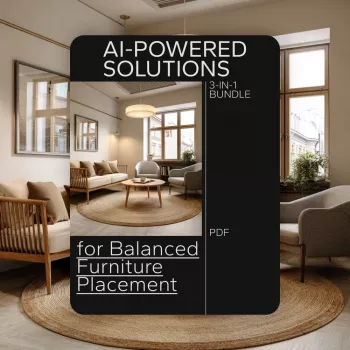
To reduce coordination overhead, pair your food plan with a simple room plan (especially if you’re hosting in a smaller space). The AI-Powered Solutions for Balanced Furniture Placement | 3-in-1 Bundle of Guides, eBooks, and Checklists can help you map traffic flow so guests aren’t bottlenecking near the kitchen.
A holiday potluck feels abundant when the categories are balanced—not when every guest brings a casserole. Use a simple structure: mains, hearty sides, veg/salad, bread, desserts, and drinks. Then assign by category so you fill gaps instead of duplicating the same comfort-food staples.
| Guest count | Mains | Hearty sides | Veg/salad | Desserts | Drinks |
|---|---|---|---|---|---|
| 6–8 | 1–2 | 2 | 1–2 | 1–2 | 1–2 |
| 10–12 | 2 | 3–4 | 2–3 | 2–3 | 2–3 |
| 14–18 | 3 | 5–6 | 3–4 | 3–4 | 3–4 |
The easiest way to get reliable follow-through is to make choosing simple and expectations explicit. Instead of asking, “What can you bring?”, offer a short list of categories and let guests pick.
| Time | Host actions | Guest actions |
|---|---|---|
| 24–48 hours before | Confirm headcount and assignments; share allergy notes | Confirm dish, portion size, and equipment needs |
| Day of (AM) | Prep space, labels, and serving tools | Finish cooking plan; pack utensils/serving spoon |
| Arrival | Direct dish placement and plug-in spots | Deliver dish with label; note reheating instructions |
| After meal | Pack leftovers safely; clean stations | Take home leftovers/containers as agreed |
For deeper guidance, rely on official references like the USDA Food Safety and Inspection Service (leftovers and the two-hour rule) and the CDC holiday food safety tips.
A small styling touch can go a long way—especially near the food table or entry. The Modern Euro Ceramic Candle Holder is an easy, budget-friendly way to add warm light without committing to a full tablescape.
For most events, one dish per household works well, with the host covering a main dish or the basics (like drinks or a simple side). If the group is small, ask for mains and hearty sides first; for larger groups, add desserts and drinks to round things out.
Assign categories (main, hearty side, veg/salad, dessert, drinks) and use a shared sign-up list so everyone can see what’s already taken. Lock in a few anchor items first, then fill gaps rather than assigning specific recipes.
Move perishable foods to the fridge within about two hours, pack leftovers in shallow containers so they cool quickly, and label them with the date. Discard items that sat out too long or that can’t be kept at a safe temperature.





Leave a comment