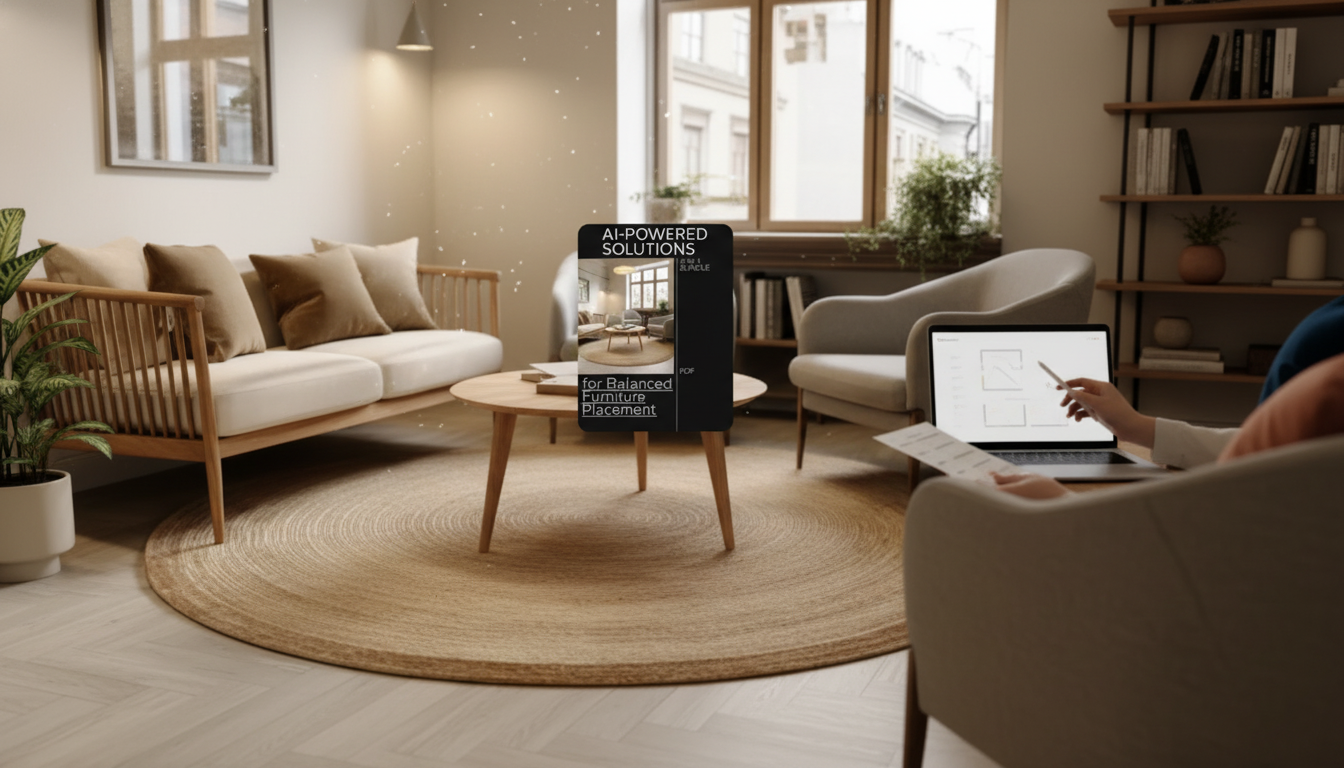
Balanced furniture placement is the difference between a room that feels “almost right” and one that feels calm, intentional, and easy to live in. When visual weight is distributed well, walkways stay clear, and focal points make sense, everyday routines become smoother—especially in small, narrow, or oddly shaped spaces.
If measuring, spacing, and second-guessing layouts feels overwhelming, AI-Powered Solutions for Balanced Furniture Placement | 3-in-1 Bundle of Guides, eBooks, and Checklists organizes the process into repeatable steps. It combines AI-assisted planning methods with plain-language rules and practical checklists, helping turn rough dimensions and lifestyle needs into clear layout options you can actually test.
“Balance” isn’t about making everything symmetrical or matching. It’s about how a room feels when you enter it, move through it, and use it.
Visual weight comes from size, color, height, and mass. A bulky sofa, a tall bookcase, or a dark media console can make one side feel “heavier.” Balanced placement spreads that weight so the room doesn’t tip visually to one end.
Function shows up in clear pathways and natural reach zones. Seating should relate to the surfaces it needs (coffee tables, side tables), storage should be accessible, and high-traffic routes shouldn’t cut through the middle of a conversation area.
Most rooms have a natural focal point: a fireplace, a TV wall, a picture window, or a statement art wall. Balanced placement acknowledges that focal point without forcing every piece to point at it like a theater.
Leaving breathing room is not “wasted space.” It defines zones, improves circulation, and makes key pieces look more intentional. Negative space is especially powerful in small spaces where every inch matters.
Design experience helps—but it’s not required. AI-assisted planning is most valuable when a room has constraints, competing priorities, or limited flexibility.
Room dimensions, door swings, windows, vents, and must-keep items become inputs that can generate multiple workable arrangements—so you start with possibilities instead of guesswork.
Instead of moving heavy furniture repeatedly, you can compare layout ideas by traffic flow, seating angles, and spacing targets first—then move only when a plan passes basic comfort checks.
When the same spacing logic is applied to the living room, bedroom, and office, the home feels cohesive. Rooms “read” as connected, even if the furniture styles differ.
When aesthetics feel subjective, checklists and scoring criteria bring clarity. Two layouts can both look good; the better one is often the one that works better day-to-day.
| Constraint | What to measure or note | Why it matters |
|---|---|---|
| Doorways & swings | Door width and swing arc, clearance near hinges | Prevents blocked entries and tight pinch points |
| Windows & radiators/vents | Sill height, vent locations, radiator depth | Avoids blocking light and airflow; protects heat sources |
| Primary walkways | Routes from entry to seating, kitchen, hallways | Keeps circulation comfortable and safe |
| Anchor pieces | Sofa/bed size, cabinet depth, table footprint | Sets the scale for the rest of the room |
| Power & media | Outlet locations, TV size, cable routing | Reduces visible cords and awkward TV angles |
This bundle is built for real homes—where rooms must handle lounging, working, storage, kids, pets, and entertaining without feeling crowded.
For a deeper look at classic composition ideas that still apply to interiors—like balance, emphasis, and proportion—see The Principles of Design from the Getty.
Check walkway clearance, door swings, and whether drawers and cabinets can open fully. For accessibility-minded clearances and circulation guidance, review the ADA Standards for Accessible Design (especially useful when planning for mobility needs).
Measure the room (length, width, ceiling height), note fixed elements (doors, windows, vents), and record major furniture dimensions. Identify primary walkways and priorities like seating count or work needs, then confirm options with clearance checks for doors, drawers, and comfortable circulation.
Yes. Focus on protecting clear circulation paths, limiting oversized anchor pieces, using multi-use items, and choosing correct rug sizing so zones feel connected. Keeping intentional negative space often makes a small room feel larger without replacing furniture.
Score each option by traffic flow, clearance for doors and drawers, focal point alignment, seating comfort, and how evenly visual weight is distributed. Select the highest-scoring layout, then refine with lighting and styling for a finished look.





Leave a comment