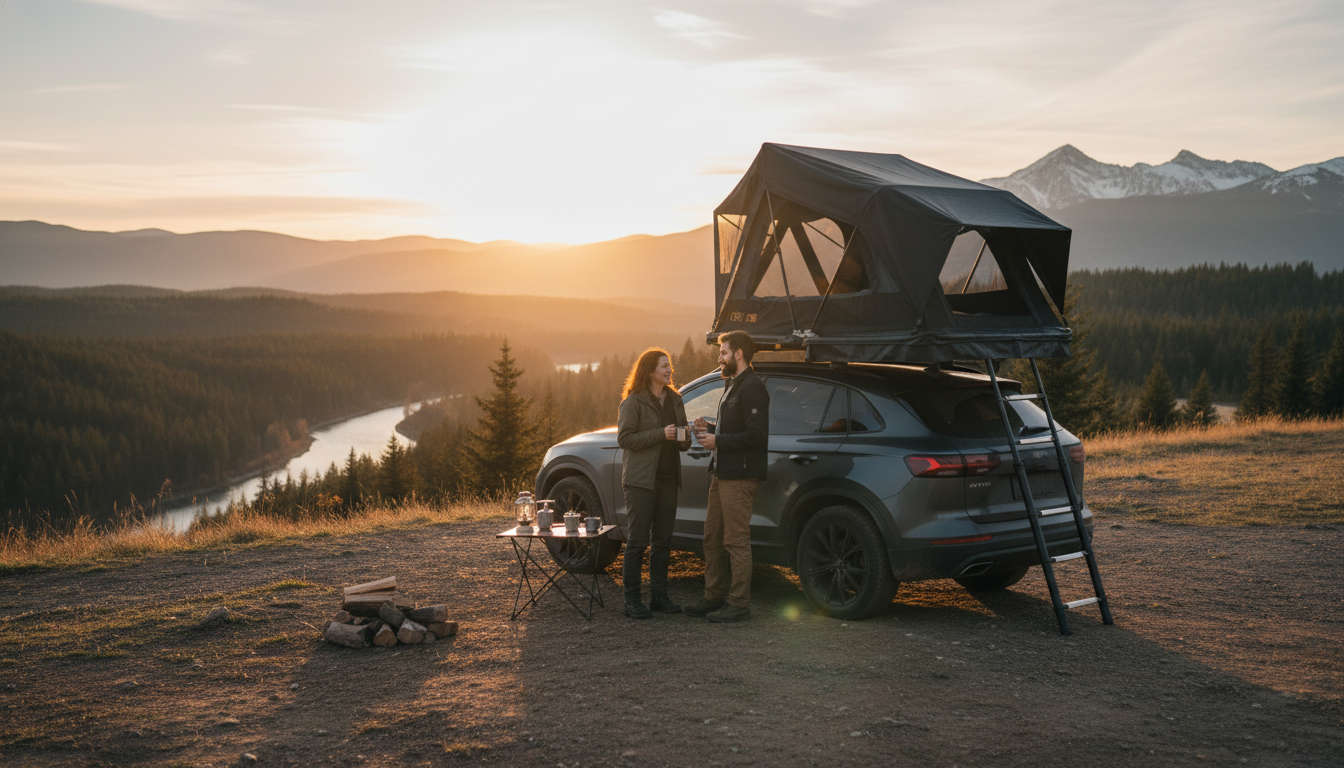
A roof-mounted tent turns a vehicle into a fast, elevated camp that stays off wet ground, mud, and uneven terrain. This guide breaks down what to look for in an all-season waterproof rooftop setup, how to prepare your vehicle, and how to get the best comfort and storm protection from the Ultimate 4-Season Waterproof Car Roof Camping Tent.
What Makes a Rooftop Tent Truly 4-Season
“4-season” isn’t just thicker fabric. It’s a combination of water control, wind stability, cold-weather livability, and ventilation that still works when the weather turns ugly.
- Weatherproof shell and seams: Waterproof fabric, taped seams, and protected zippers reduce leak points during wind-driven rain.
- Cold-weather livability: Draft control, an insulated feel (or the ability to add liners), and condensation management matter as much as waterproofing.
- Wind stability: Rigid frame support, low-flutter fabric tensioning, and secure ladder anchoring help prevent noisy movement in gusts.
- Fast, repeatable setup: Consistent deployment makes arriving late, packing early, or setting up in rain far less stressful.
- Ventilation with protection: Vents that can remain open during rain help manage humidity without inviting water intrusion.
4-Season Readiness Checklist
| Condition |
What to Check |
Practical Target |
| Heavy rain |
Taped seams, storm flaps, zipper garages |
No exposed zipper track on top-facing panels |
| Strong wind |
Frame rigidity, tie-down points, fabric tension |
Multiple anchor points and taut panels |
| Freezing nights |
Draft reduction, ability to add insulation/liner |
Minimal air gaps; compatible layering |
| Condensation risk |
Cross-ventilation, moisture escape paths |
Two-way airflow without rain entry |
| Snow or frost |
Fabric shedding, roof pitch, ease of clearing |
No flat surfaces that hold buildup |
Vehicle Compatibility and Safe Roof Loading
A rooftop tent is only as safe as the system holding it. Before ordering or mounting, match the tent to your vehicle’s rack and load limits.
- Confirm roof rack suitability: Use a rack and crossbars rated for rooftop tent use. Prioritize systems designed for dynamic loads while driving and the higher static loads when parked.
- Know the load types: Dynamic load is the limit while moving; static load is the limit while parked—both matter for safe use.
- Measure clearance: Account for vehicle height plus tent height to avoid parking garage and low-branch surprises.
- Positioning on the rack: Center the tent for balanced weight distribution, and ensure clamp contact points sit squarely on crossbars.
- Plan ladder placement: Choose a side that provides level footing and keeps the entry away from traffic or a steep slope.
If a trip includes tire swaps or minor roadside work, keeping a reliable lifting solution can make camp logistics less stressful. The 3 Ton Triple Bag Pneumatic Air Jack with Wheels & Long Handle is a convenient option to consider for vehicle support tasks where appropriate.
Setup Flow: From Arrival to Sleeping in Minutes
A calm, repeatable routine is what makes rooftop camping feel effortless—especially when you arrive late or the weather shifts quickly.
- Park smart: Choose the flattest possible spot, set the parking brake, and chock a wheel on sloped ground.
- Use wind to your advantage: If possible, orient the vehicle so the tent entry is downwind to reduce drafts and keep rain from blowing inside when you climb in.
- Tension first, then relax: Tension fabric panels and secure storm flaps/rainfly (if included) before rain starts; this reduces pooling and flapping.
- Dial in the ladder angle: Stable footing and the correct angle reduce bounce and improve safety during night entry/exit.
- Final perimeter check: Confirm clamps and latches are locked, and any guylines are staked away from walking paths.
Staying Dry: Waterproofing Habits That Matter
All-weather comfort comes from both the tent’s build and the owner’s habits. Small maintenance steps reduce leaks, extend fabric life, and keep the interior feeling clean.
For storm planning, check local forecasts and safety guidance before heading out. NOAA’s resources are a solid baseline for travel decisions: NOAA National Weather Service — Weather safety and preparedness.
Cold Nights and Condensation Control
Comfort and Camp Layout for Roadside or Backcountry Stops
- Entry ergonomics: Keep a headlamp at the top of the ladder and a small shoe mat at the base for cleaner entry.
- Noise management: Tension fabric to reduce flapping; when feasible, park with the vehicle nose into the prevailing wind.
- Quick-grab essentials: Keep water, layers, and a small first-aid kit within reach inside the vehicle for late-night needs.
- Leave-no-trace practicality: Elevated sleeping reduces ground disturbance; still follow area rules for camping and parking. Review the Leave No Trace — The Seven Principles before traveling to sensitive areas.
- Security: Keep valuables in the vehicle, choose permitted areas, and follow local guidance (including park rules). The National Park Service — Camping safety page is a helpful reference when planning.
Pricing, Value, and What’s Included
Current In-Stock Option
FAQ
Will a rooftop tent fit any car?
Fit depends on having a roof rack/crossbar system rated for rooftop tent use, your vehicle’s roof limits, crossbar spacing, and the tent’s mounting hardware. Check both the rack manufacturer’s dynamic/static load ratings and the tent’s weight and dimensions before installing.
How does waterproofing work during wind-driven rain?
Protection comes from taped seams, storm flaps, and protected zippers, plus proper fabric tensioning so water sheds instead of pooling. Keeping the entry downwind and maintaining zippers (cleaning and lubricating) also helps prevent water intrusion during gusty storms.
How can condensation be reduced in cold weather?
Ventilation is key even when it’s cold, and wet gear should be stored outside the sleeping space whenever possible. An anti-condensation mat, wiping down interior moisture in the morning, and using appropriate sleeping insulation help keep bedding drier overnight.
Recommended for you






Leave a comment