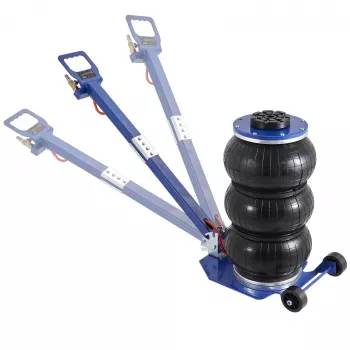
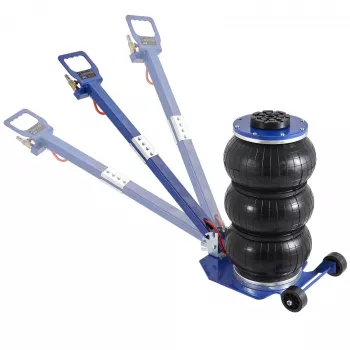
A triple bag pneumatic air jack is designed to lift vehicles quickly using compressed air, reducing pumping effort and improving speed during tire changes, roadside assistance, and shop work. This 3-ton model pairs a high-capacity air cushion with wheels and a long handle for easier positioning and controlled lifting in garages, driveways, and service bays.
A pneumatic triple bag jack is a practical choice when fast setup and quick lifting matter more than slow, manual pumping. The air bags expand straight up, helping you get a vehicle off the ground with less physical effort.
This style of air jack is straightforward, but each component contributes to smoother positioning, steadier lifting, and safer operation when used correctly.
When these parts work together, the workflow is typically: roll the jack into position with the handle, align the contact area under the lift point, inflate to lift, then transfer the load to jack stands before doing any work.
Before choosing (or using) any jack, match the tool to the vehicle and the environment. A 3-ton (6,000 lb) rating is sufficient for many passenger cars and some light-duty applications, but capacity alone doesn’t guarantee compatibility.
| What to check | Why it matters | What to do |
|---|---|---|
| Vehicle weight and lift point guidance | Avoids overloading and improper lifting locations | Compare curb weight to rating and follow the owner’s manual jacking points |
| Ground clearance at the lift point | Determines whether the jack can be positioned under the car | Measure clearance; choose a low-profile approach if needed |
| Compressor pressure/airflow | Affects lift speed and ability to reach full height | Confirm compressor specs and hose connections before starting |
| Work surface | Uneven/soft surfaces increase instability | Use flat concrete when possible; add a sturdy plate on softer ground |
Pneumatic lifting is fast, so the safest approach is deliberate: verify placement, lift gradually, and never work under a vehicle that’s supported only by a jack. Safety standards for portable automotive service equipment emphasize proper use and inspection practices; see ASME PASE guidance for broader context, and review general hazard awareness resources from OSHA.
Two features make a noticeable difference during day-to-day use: mobility and reach. A rolling base reduces the “fight” of getting a heavy jack lined up under a lift point, while a long handle helps steer the jack where you want it without leaning under the vehicle.
The jack needs enough pressure and airflow to inflate smoothly and reach full lift. Check the jack’s required PSI and compare it to your compressor’s CFM rating, then confirm your hose and fittings match for a secure connection.
No—jacks are designed for lifting, not supporting a vehicle while you work. After lifting, place appropriately rated jack stands at proper support points and keep wheel chocks in place.
It depends on the jack’s minimum height and the clearance at the vehicle’s recommended lift point. Measure the clearance first and confirm the jack can fit underneath before you begin inflating.






Leave a comment