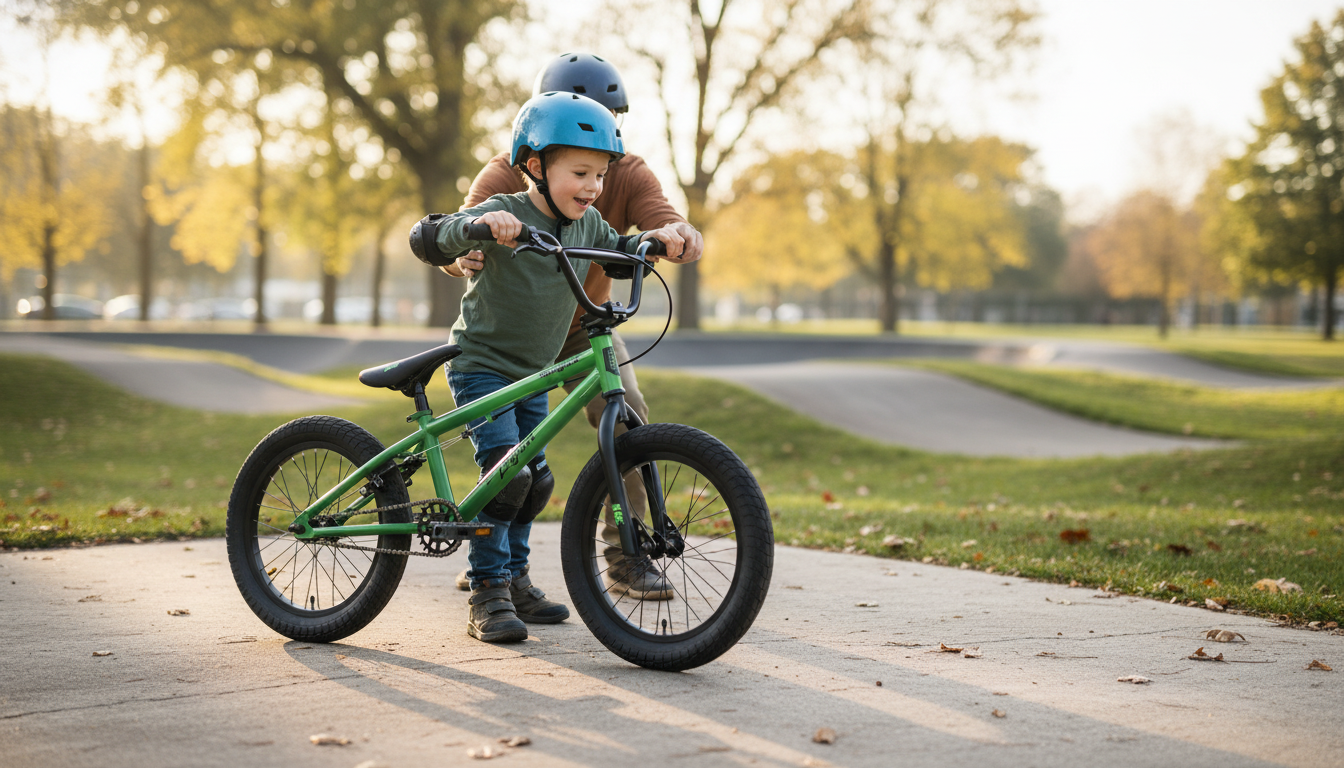
A first BMX-style bike should feel stable, predictable, and tough enough for everyday curb hops and driveway practice. This 16-inch kids freestyle sidewalk BMX bike pairs a Hi-Ten steel frame with beginner-friendly sizing so young riders can build confidence while learning basic handling, braking, and simple tricks.
If you’re shopping for a sturdy, confidence-first setup, see the Kids Freestyle Sidewalk BMX Bike – Hi-Ten Steel Frame, 16″ Wheels for Beginner Riders available now.
Instead of chasing top speed, this style of bike is about control: predictable steering, repeatable braking, and a solid feel when the pavement changes from smooth driveway to sidewalk seams.
For early riders, “easy to control” usually beats “lightweight” or “fast.” A bike that tracks straight, brakes smoothly, and feels consistent underfoot helps kids practice longer—and with fewer scary moments.
Wheel size is only part of the fit equation. Before the first ride, do a quick setup check that focuses on how the rider starts, stops, and stabilizes at low speed.
| Fit point | What to look for | Quick adjustment |
|---|---|---|
| Standover clearance | Comfortable straddle with space | Lower seat or confirm size suitability |
| Seat height for learning | Easy starts/stops, confident foot-down | Lower seat slightly; raise as skills grow |
| Handlebar reach | Relaxed shoulders, slight elbow bend | Rotate bars or fine-tune stem alignment (if applicable) |
| Brake lever reach | One- or two-finger pull without overreaching | Angle levers downward slightly; adjust reach if available |
| Tire pressure feel | Stable, not squirmy; absorbs small cracks | Inflate within tire sidewall range |
A helpful rule for new riders: set the seat a bit lower at first so starts and stops feel “automatic.” As confidence grows, raise it gradually to improve pedaling efficiency.
Sidewalk riding is full of tiny surprises—slabs that don’t line up, expansion joints, and little edges at driveway aprons. A sturdy frame and a stable setup can make those transitions feel less dramatic while kids focus on looking ahead and steering smoothly.
For helmet guidance and general riding safety, consult authoritative resources like the Consumer Product Safety Commission (CPSC) bicycle helmet information and Safe Kids Worldwide bike safety tips.
A simple practice pattern that works well is “roll, brake, step down.” Repeating that sequence teaches kids to slow down early (not at the last second), keep the bike straight under braking, and put a foot down without tipping.
Fit matters more than age, but 16-inch bikes are commonly chosen for younger kids who are ready for two wheels. A good fit means comfortable standover clearance and the ability to start, brake, and put a foot down confidently without wobbling.
Hi-Ten steel is a tradeoff: it typically adds durability and a stable feel, but it can weigh more than some other materials. Prioritize correct sizing and setup, and keep early practice on flat areas so handling feels controlled and predictable.
Confirm brakes stop smoothly, wheels are secure, handlebar/stem bolts are tight, pedals are tight, and tires are inflated within the tire’s stated pressure range. Also make sure the helmet fits properly and doesn’t shift when the child moves their head.



Leave a comment