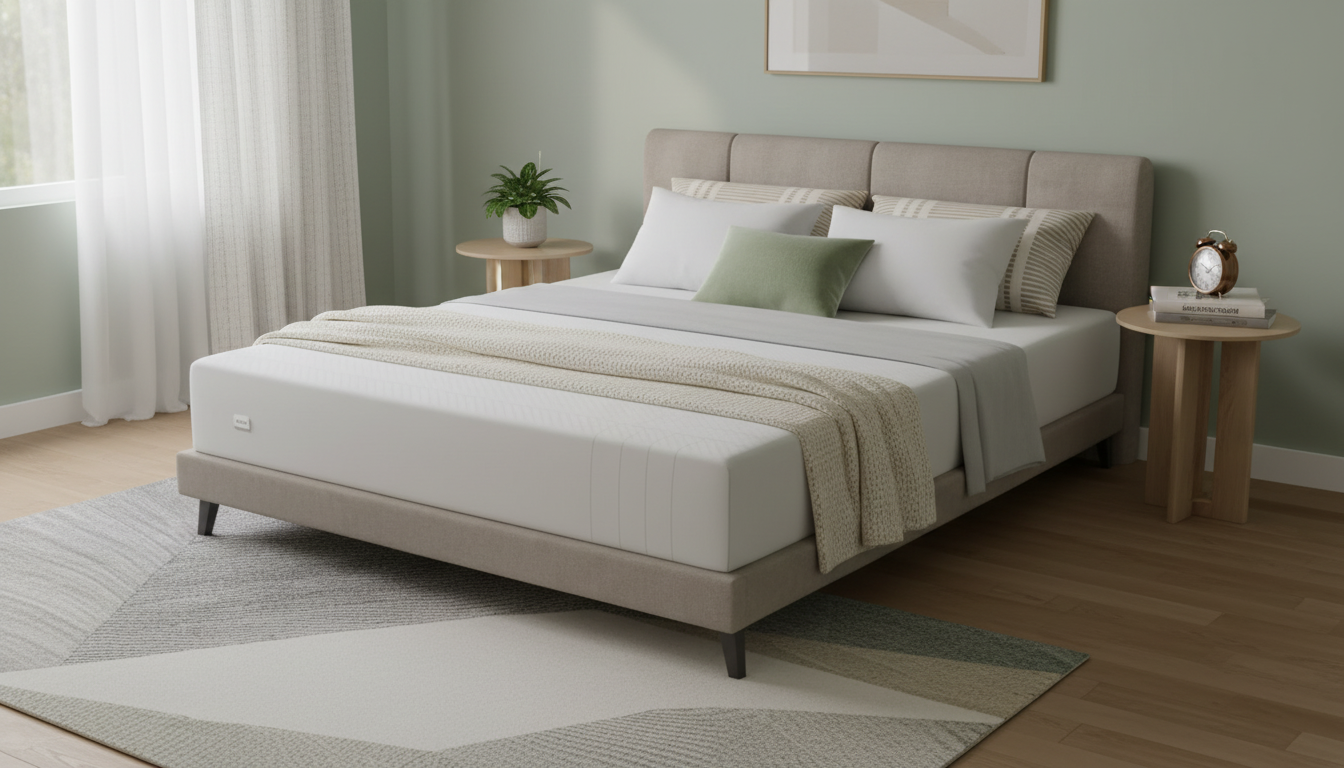
A flippable mattress can be a practical way to fine-tune comfort over time—especially for back and side sleepers who need both pressure relief and stable spinal support. This 12-inch king option pairs breathable foam comfort with a reversible build, aiming to balance contouring with a more even, supportive feel across the full sleep surface.
A two-sided mattress brings a different kind of flexibility than one-sided beds. Instead of relying on a single “top” that gradually softens in the same body zones, you can flip to refresh the surface and spread out daily wear.
Back sleeping usually feels best when the mattress supports the natural curve of the spine—particularly through the lumbar area—without creating pressure at the shoulders. The goal is a stable, level feel with gentle contouring rather than a deep “hammock” sink.
For general sleep health guidance and the role of good sleep habits, the NIH overview on healthy sleep is a helpful reference.
Side sleeping often creates sharp pressure points at the shoulder and hip, while the waist needs enough support to prevent the spine from bending sideways. This is where well-tuned foam comfort can matter: it cushions bony contact points without letting the midsection drift out of alignment.
If you’re comparing sleeping positions and how they affect comfort, this overview from Sleep Foundation on sleeping positions can provide additional context.
“Breathable foam” isn’t one single material—it’s a design approach. Airflow and temperature feel depend on how the foam is built, what the cover is made of, and whether heat can move away from the body instead of pooling near the surface.
For broader information about sleep and common issues that interfere with rest, the CDC sleep resource hub is a solid starting point.
| Feature | What it means | Why it matters for back & side sleepers |
|---|---|---|
| 12-inch profile | Thicker overall build with more room for comfort/transition layers | Helps balance cushioning with deeper support to keep the spine aligned |
| Flippable design | Two usable sleep surfaces | Lets sleepers adjust feel over time and distribute wear more evenly |
| King size | Wide sleep surface for individuals or couples | More room to change positions and reduce partner disturbance |
| Breathable foam comfort | Comfort layer designed to allow better airflow than less-ventilated foam | Can reduce heat buildup and improve pressure relief at shoulders/hips |
Flip every 1–3 months during the first year to help even out early break-in and body impressions. After that, adjust the schedule based on comfort changes and visible wear, and rotate head-to-foot between flips if recommended.
In many cases, yes—because a 12-inch profile often provides enough layer depth to combine pressure relief with deeper support for alignment. The right foundation matters too, especially for a king frame that needs strong slats and center support.
It can, but it depends on the foam structure and the cover materials. Breathable designs may reduce heat buildup, and temperature feel is also influenced by bedding choices, room temperature, and whether a protector allows airflow.

Leave a comment