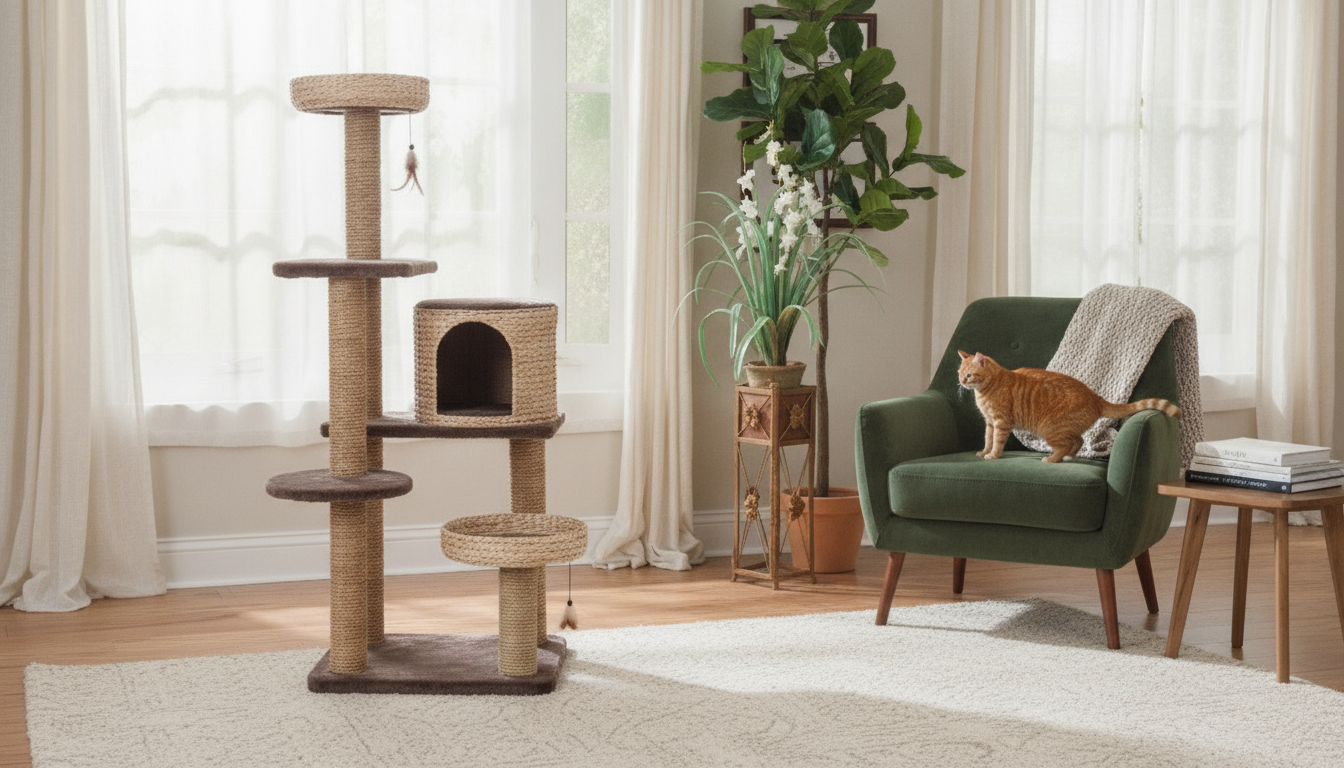
A statement piece for cat-friendly homes, a banana leaf woven cat tree blends natural texture with a sturdy climbing frame and a dedicated scratch board—supporting daily play, stretching, and claw care while complementing elevated interiors.
A luxury cat tower shouldn’t read like an afterthought. The appeal of banana leaf weaving is that it looks warm and organic while still feeling refined—more like intentional furniture than a bulky pet accessory. A well-designed piece also considers how cats actually move: up, across, and down, with multiple “decision points” that keep them engaged.
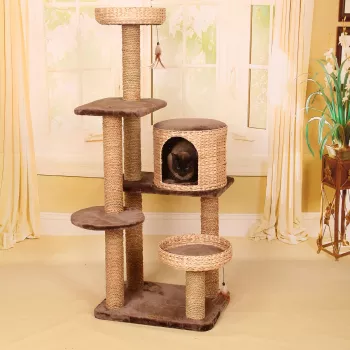
If you’re looking for a true centerpiece option, explore the Luxury Banana Leaf Woven Cat Tree with Climbing Frame & Scratch Board—built to deliver both visual impact and daily usability.
Vertical territory is a big deal for many cats. When a tower offers climbing routes, stable perches, and a dedicated scratching surface, it can become the “hub” that reduces boredom behaviors and distributes activity away from rugs and sofa corners. Guidance from feline welfare organizations consistently highlights the importance of enrichment, climbing choices, and species-typical behaviors like scratching (see AAFP environmental needs guidelines and International Cat Care on scratching).
For homes managing shedding and dander, pairing an active cat zone with cleaner air can make the entire space feel fresher—especially in living rooms where a cat tree often becomes a focal point. The Advanced Air Purifier for Large Rooms up to 1000 sq ft with PECO-HEPA Tri-Power Filter is a complementary option for larger shared areas.
Premium doesn’t have to mean complicated. The most satisfying setups are the ones cats repeatedly choose—because the surfaces feel right under paw, the layout rewards climbing, and the scratch zone is placed where it actually gets used.
| Element | What it does for cats | What it does for the home |
|---|---|---|
| Climbing frame | Encourages jumping, balance, and daily movement | Keeps play vertical to save floor space |
| Scratch board | Supports scratching instincts and stretching | Helps protect sofas, rugs, and trim |
| Banana leaf woven exterior | Adds texture and grip; feels natural to paw | Creates a high-end, organic look |
| Multi-level layout | Offers choice of perches and resting spots | Looks like a cohesive furniture piece |
Placement often determines whether a cat tree becomes a daily favorite or a rarely used corner object. Most cats prefer to perch where they can observe people, entrances, and outdoor activity—without being constantly startled. A few small adjustments can dramatically increase how often the tower gets chosen.
Tip for small rooms: prioritize vertical “real estate.” A tall, well-placed tower can replace multiple smaller scratchers and floor toys, keeping the room visually calmer while still giving cats a rich environment.
Natural woven pieces stay looking elevated when they’re maintained like real furniture. Basic upkeep also helps keep the scratch zone attractive, which supports better habits over time.
Place the cat tree right next to the area your cat targets, then reward any scratch-board use with praise or a small treat. A light sprinkle of catnip can help, and it’s best to avoid punishment—consistency and placement do the heavy lifting. Once the habit is established, move the tree gradually if you want it in a different spot.
Natural woven materials are commonly used in pet furniture and are typically safe when the piece is stable and well-constructed. If your cat is a determined chewer, supervise early use, trim any loose strands, and inspect the weave periodically to reduce snagging or ingestion risks.
A corner near a window is often ideal, as long as there’s enough clearance for comfortable jumping and landing. Keep it away from doors, loud vents, and tight walkways so the upper perches feel secure and restful, not disruptive.

Leave a comment