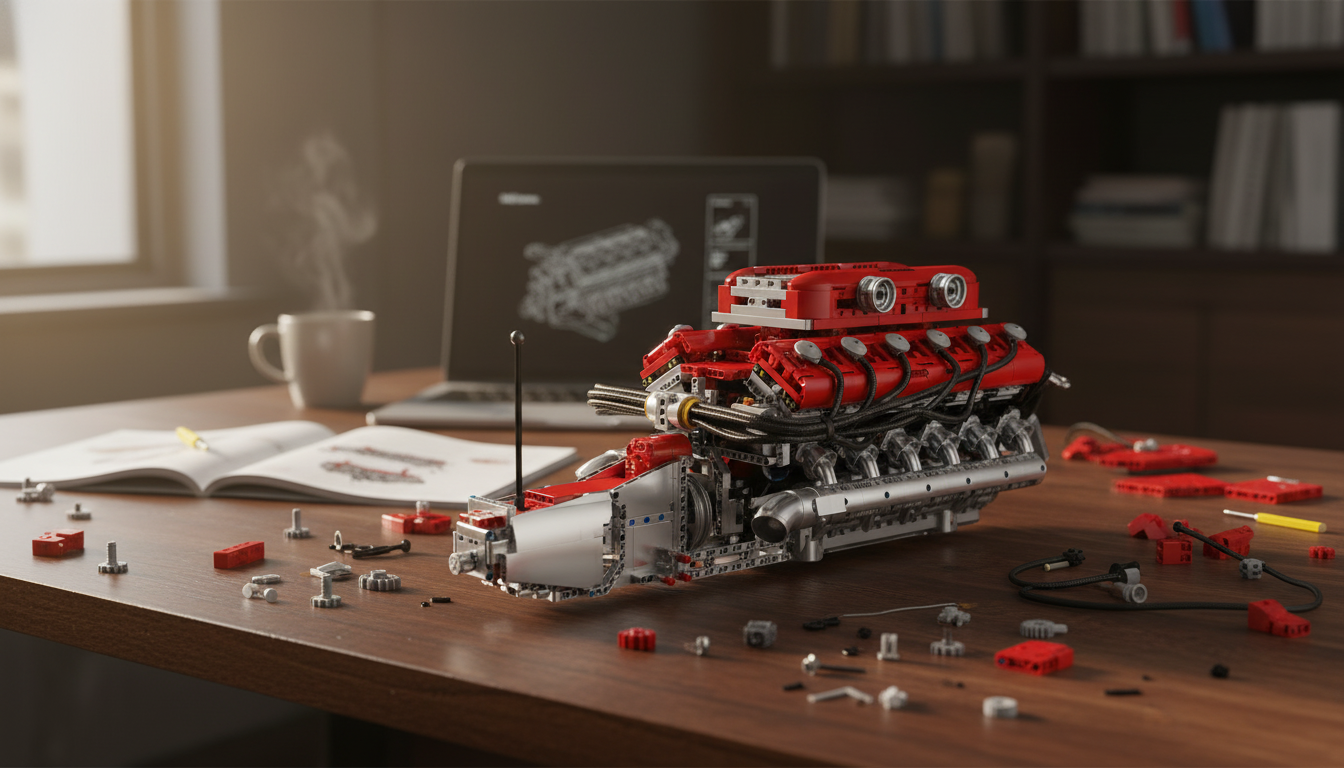
A V12 engine has a special kind of appeal: lots of cylinders, tightly coordinated motion, and a reputation for smoothness. A buildable V12 engine model kit brings that fascination down to desk scale, turning assembly into a clear, moving lesson in how multi-cylinder petrol engines create continuous, balanced power. When the crankshaft turns and each piston starts its up-and-down cycle, the essentials of an internal-combustion layout become easy to see and remember.
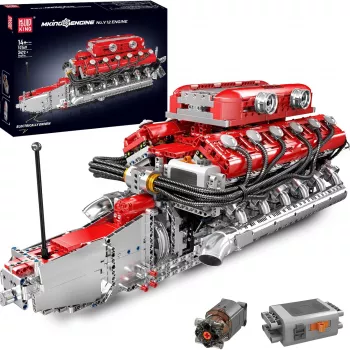
If you want a hands-on mechanical project that ends as a functional display piece, start with the Build Your Own V12 Engine Kit – Working 12-Cylinder Petrol Engine Model Toy.
The “V” in V12 describes two banks of cylinders arranged at an angle and joined by a shared crankshaft. That geometry keeps the engine relatively compact for how many cylinders it contains, and it creates a symmetrical look that’s instantly recognizable.
While exact contents vary by version, most V12 model engine kits arrive with the main structure and the small components needed to build a moving mechanism.
For builders who like a comfortable, organized work session, small upgrades to the hobby space can help. A supportive seat or a cleaner work area can make longer assembly sessions more enjoyable, such as the Cotton Linen Universal Car Seat Cushion with Anti-Slip Backing for a workshop chair, or the Advanced Air Purifier for Large Rooms up to 1000 sq ft with PECO-HEPA Tri-Power Filter if your build area tends to collect dust.
A V12 model engine build is most enjoyable when it’s approached like a miniature mechanical assembly: organize first, confirm smooth motion early, then lock in timing only after the crank and pistons move freely.
| Stage | What to verify | Why it matters |
|---|---|---|
| Parts prep | No missing screws/shafts; parts grouped by subsystem | Prevents mid-build stalls and incorrect substitutions |
| Crank rotation | Crank spins freely with even resistance | Avoids binding once pistons are installed |
| Piston travel | Each piston slides smoothly without scraping | Improves reliability and reduces wear |
| Timing | Marks aligned; gears/belts seated correctly | Keeps motion synchronized across all cylinders |
| Final hand test | Multiple full rotations without catching | Confirms assembly integrity before display/use |
If you want a straightforward explanation of the four-stroke sequence often referenced when discussing petrol engines, NASA’s beginner-friendly resource on engine cycles (four-stroke) helps connect the motion you see to the steps an engine follows.
Ready to build a working mechanical display? The Build Your Own V12 Engine Kit – Working 12-Cylinder Petrol Engine Model Toy is a hands-on project that looks as impressive in motion as it does on the shelf.
Yes, as long as you follow the build sequence carefully and take your time with alignment. Prior engine knowledge isn’t required, but patience with timing marks and small hardware makes a big difference.
Most builders should expect a few hours to a weekend, depending on pace and how often you pause to double-check timing and fit. Having tools ready and sorting parts first typically shortens the build.
Start with hand-rotation: look for where it catches, then re-check piston travel and confirm no fastener is over-tightened. Next, verify timing marks and ensure gears or pulleys are fully seated and aligned.






Leave a comment