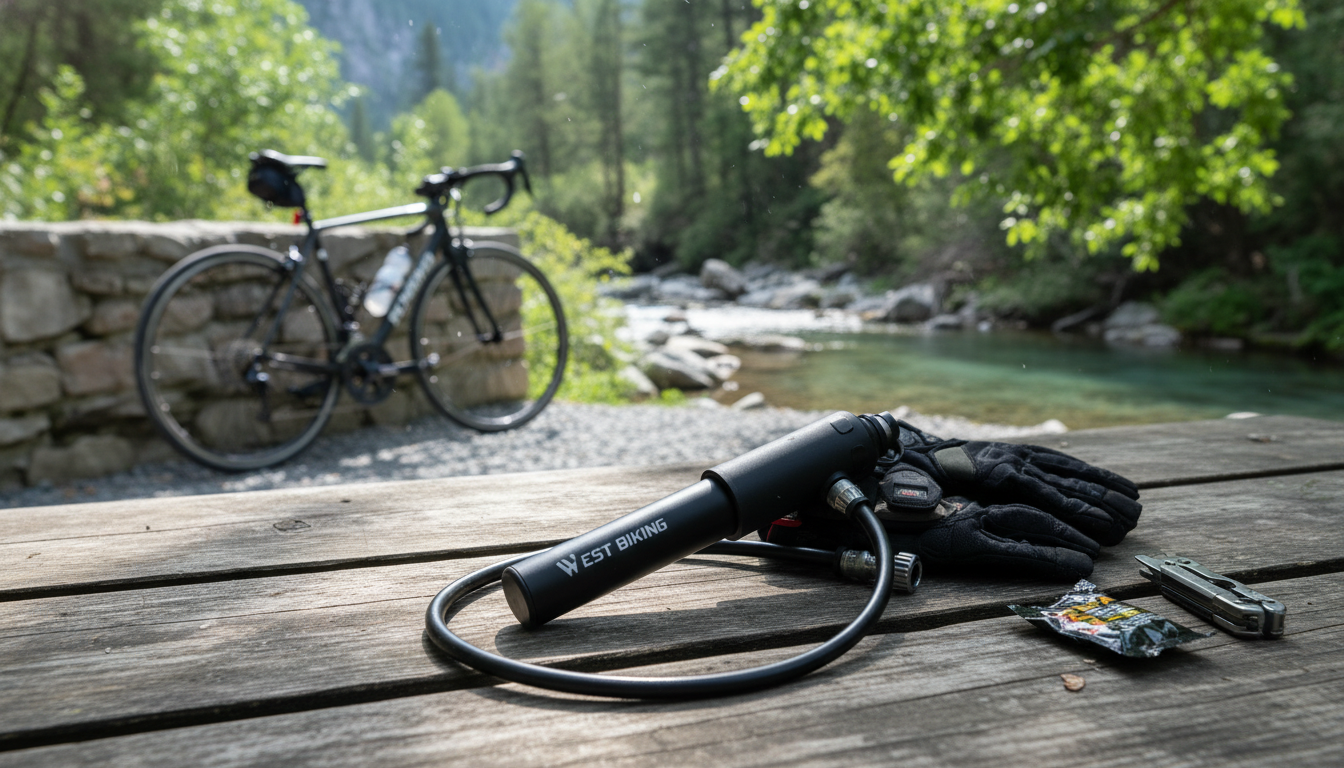
A compact hand pump with a flexible hose is one of the easiest ways to keep tires at the right pressure on commutes, weekend rides, and roadside fixes. A mini bike pump rated up to 110 PSI is especially handy when you’re running narrower tires, topping off before a ride, or recovering from a slow leak after you’ve already used a patch or swapped a tube. The key is choosing a pump that connects securely, inflates efficiently, and doesn’t punish your valve stem while you’re working. For more guidance, see Accuracy Tire Pressure Monitoring System Vs. Tire Gauge.
Mini pumps are all about portability, but the hose is what makes them feel dramatically more “rideable” when you’re stuck on the shoulder or squeezed beside a bike rack.
A 110 PSI max rating is most useful for bikes that naturally run higher pressure—many road and hybrid setups with narrower tires. That said, the printed maximum isn’t the whole story.
If you want a deeper mechanical overview of tires and tubes, Park Tool’s repair resources are a solid reference: Park Tool – Tire and Tube Basics.
Mini pumps live or die by how well they seal to the valve and how controllable they feel under load.
Efficient pumping is mostly about setup. A few small habits can save dozens of strokes and reduce the chance of a leaky valve connection.
Pressure is personal—tire casing, load, and rider weight can shift what feels best. If you want a structured starting point and rationale, Schwalbe’s pressure guidance is widely used: Schwalbe – Tire Pressure Guide.
| Bike / tire type | Common tire width | Typical PSI range |
|---|---|---|
| Road | 23–32 mm | 70–110 |
| Hybrid / commuter | 32–45 mm | 45–75 |
| Gravel | 35–50 mm | 30–55 |
| Mountain | 2.1–2.6 in | 18–35 |
The Mini Bike Tire Pump 110 PSI Portable Hand Inflator with Hose is a compact backup pump designed for on-the-go inflation up to 110 PSI. Its flexible hose helps reduce valve stress during pumping and removal, making it a practical option for topping up before a ride, fixing a slow leak, or reinflating after a tube change.
For commuters who want small comfort upgrades beyond tire tools, the Cotton Linen Universal Car Seat Cushion with Anti-Slip Backing can be a helpful add-on for mixed-mode travel days when driving is part of the routine.
It depends on the pump head design. Many mini pumps support both via a reversible head or a switchable interface, while others require a small adapter—match the pump to your valve type and keep any adapter stored with the pump.
There isn’t a single number, but many riders find it can take roughly a couple hundred strokes (sometimes more) depending on tire size and pump barrel volume. A better seal at the head and smooth full strokes can noticeably reduce the total effort.
110 PSI is only “too much” if it exceeds the tire’s stated sidewall range or isn’t appropriate for the tire width and conditions. Higher pressure isn’t automatically better—wider tires and rougher surfaces often ride safer and faster at lower PSI within the approved range.






Leave a comment