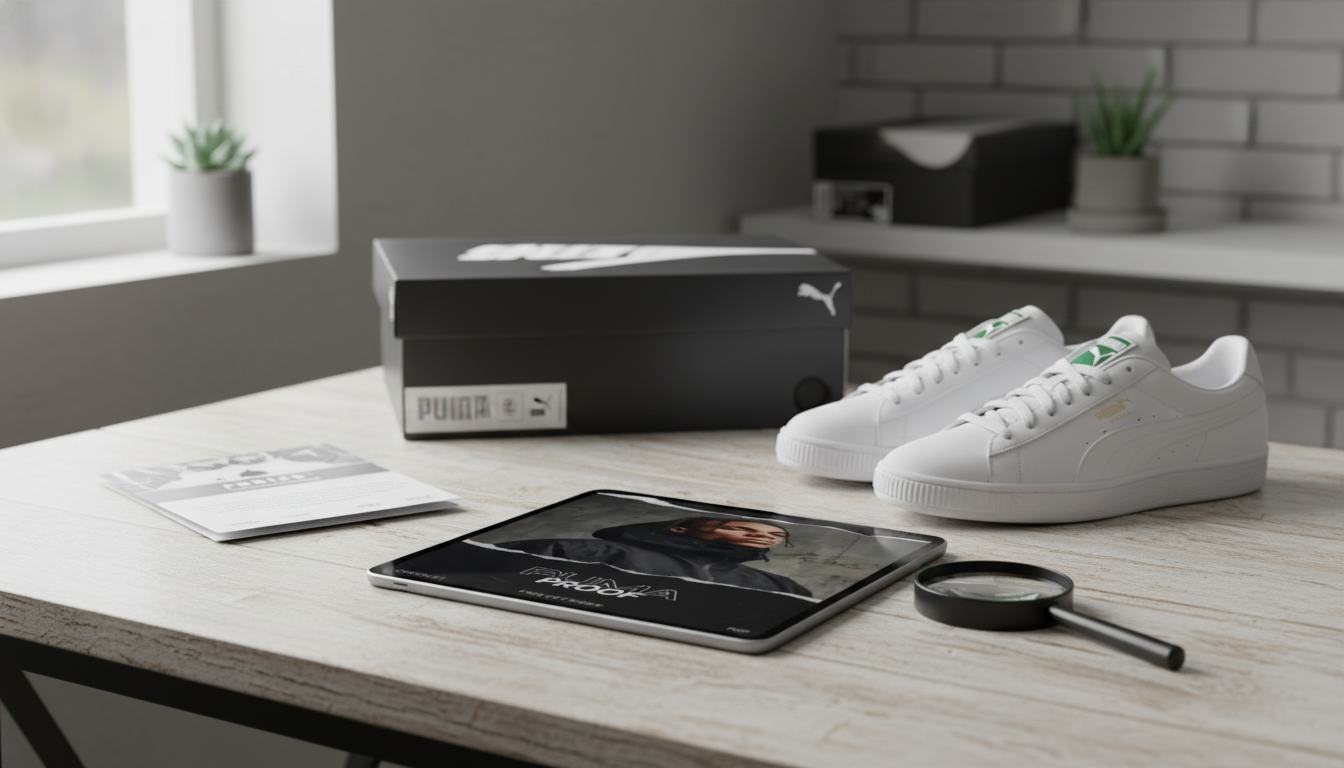
Counterfeit Puma products can look convincing online, especially when listings rely on flattering lighting or stock photos. An authenticity check matters most when the buying setup is high-risk: third-party marketplaces, social media “drops,” bulk deals, overseas resellers, and listings that don’t show the key details (tags, box label, or close-ups).
Risk also climbs for popular sneaker colorways, collaboration releases, and anything priced far below typical retail. The best timing is twice: first, run seller and listing checks before paying; then repeat the inspection immediately after delivery while return windows are still open. The goal isn’t to find one magical “tell”—it’s to stack multiple small signals until the result becomes clear.
Start by comparing the listing to official Puma imagery: logo placement, panel shapes, outsole patterns, and the exact color naming used by Puma retailers. Listings often reveal problems through what they avoid showing—cropped size tags, missing box label photos, or descriptions that don’t match the photos (model name differs, odd colorway naming, or vague wording).
Do a price reality check. Huge “new release” discounts, “factory direct” claims, and “no returns” policies raise risk fast. Then look at seller behavior: a credible seller usually has a consistent history and coherent inventory, not a sudden flood of many sizes and multiple colorways at once.
Finally, request photos that matter. Clear shots of the size tag, box label, tongue label, heel branding, insole print, stitching close-ups, and any QR/serial labels will reveal far more than extra lifestyle angles.
| Signal | Lower risk | Higher risk |
|---|---|---|
| Photos provided | Multiple angles, close-ups of tags and box label | Stock photos only or blurry images |
| Pricing | Within typical retail/seasonal sale range | Unusually low for condition/release |
| Returns & buyer protection | Clear returns, tracked shipping, platform protection | No returns, off-platform payment requests |
| Product description | Consistent model name, colorway, and SKU where possible | Conflicting model names, vague terms, misspellings |
| Seller profile | Long history, consistent niche inventory | New profile, sudden high-volume listings |
Once the item arrives, move from high-signal checks to deeper ones. Start with packaging. A genuine Puma box typically has sharp printing and a clean, readable label. The box label should match the item: size, colorway, and product code/SKU. A mismatch here is one of the strongest early warnings.
Next, confirm identifiers across locations. The box label, tongue/inner size tag, and any hangtags should align in size, model family naming, and regional sizing formats. Then examine construction and materials: authentic pairs tend to have consistent fabric or mesh density, even glue lines, clean edges, and symmetrical paneling between left and right shoes.
Stitching and alignment are major tells. Look for straight stitch runs, uniform spacing, clean backstitching, and mirrored placement of logos and overlays. Counterfeits often show wavy stitching, uneven tension, or subtle asymmetry that becomes obvious when you compare both shoes side-by-side.
Inspect brand marks closely. The Puma cat logo and wordmarks should have crisp edges, correct proportions, and consistent embossing depth or print coverage. If the logo looks stretched, too thick, or oddly angled—or if printed marks flake too easily—treat it as a serious red flag.
Finish with the insole/interior and outsole. Insole printing should be clear, the footbed should feel consistent, and the inner lining seams should look tidy. Strong chemical odor can indicate low-quality adhesives. On the outsole, check tread pattern sharpness and symmetry; soft or rounded details can point to low-grade molds. Also note weight and comfort—counterfeits may feel unusually light/heavy, with uneven cushioning response or awkward arch support.
Throughout the process, take photos of labels, the box sticker, and any defects. This documentation helps with returns or platform disputes.
Document everything immediately with clear photos: box label, size tags, logos, stitching close-ups, and defects. Compare the item with official references from the PUMA Official Website and authorized retailers, and confirm the specific colorway exists.
Use buyer protection tools and keep communication on-platform. If you need context on why counterfeits are treated seriously, the U.S. Customs and Border Protection — Counterfeit Goods resource outlines the risks and enforcement landscape, and the EUIPO — Facts and figures on counterfeit goods highlights how widespread the issue is.
If you want a ready-to-use flow you can keep on your phone, see Puma Proof – Ultimate puma authenticity check Checklist (digital download). For broader brand comparison and buying clarity across popular labels, Converse vs Adidas Brand Perception Power: The Ultimate Brand Comparison Checklist is also available as a quick-reference guide.
Not by itself. Codes can be copied, so treat them as one signal and prioritize consistency across the box label, size tags, construction quality, and whether the SKU/colorway matches official references.
High-signal warnings include a box label that doesn’t match the shoe, poor stitching symmetry, distorted logo proportions, inconsistent label formatting, unusually strong chemical odor, and major price/seller red flags.
Photograph the box label, tags, logos, and defects right away, then compare against official images and product details. Start a return/refund or platform dispute within the deadline, keep communication on-platform, and avoid damaging the item before the case is resolved.



Leave a comment