Cycle Your Skincare Right: 3-in-1 Skin Cycling Routine Bundle for a Steadier Glow
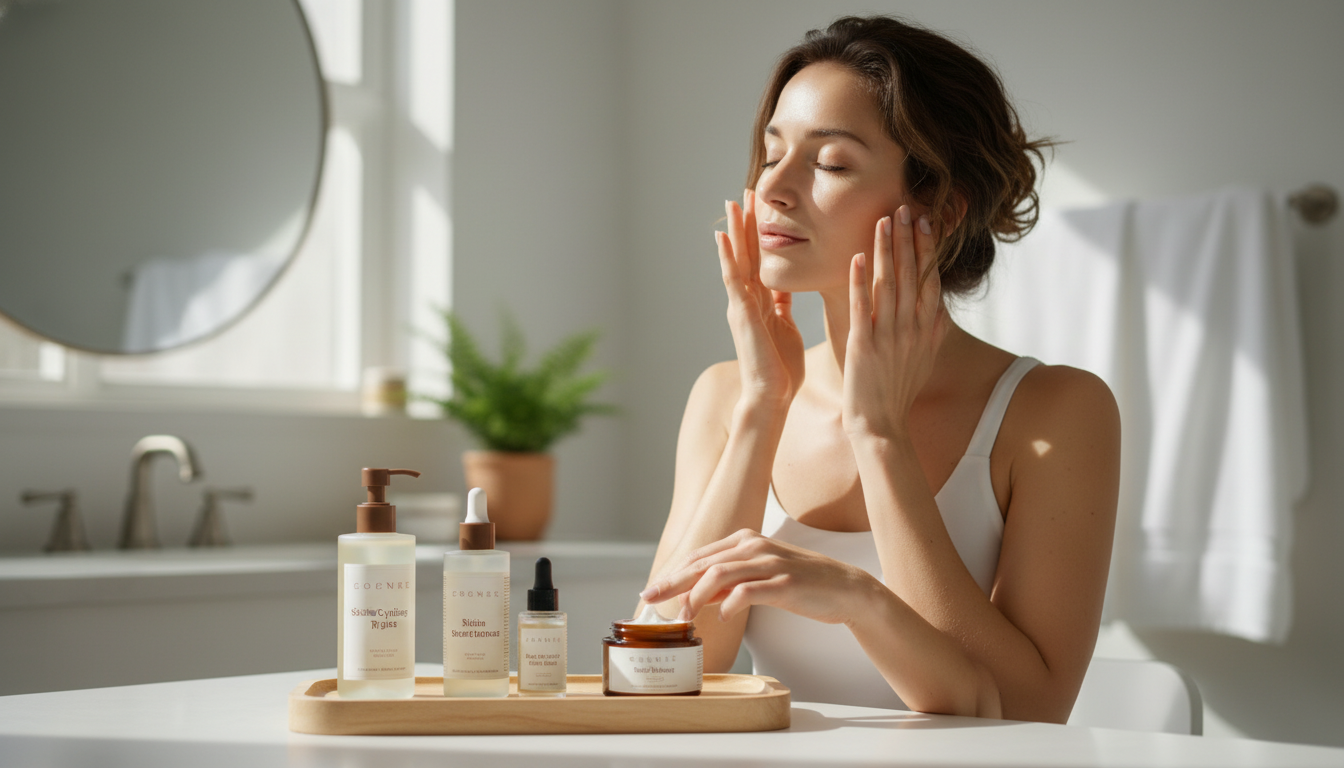
Skin cycling is a simple way to organize actives and recovery nights so skin looks brighter without feeling overworked. This routine focuses on predictable steps—treatment nights followed by barrier-support nights—so results can build while irritation stays lower. The 3-in-1 Skin Cycling Routine Bundle is designed to keep the cadence easy to follow and repeat.
What “skin cycling” means (and why it works for many routines)
Skin cycling is a repeating schedule where targeted active nights are separated by recovery nights. Instead of throwing every “power” product at your face at once, you rotate categories in a way that gives skin time to respond—and time to recover.
- It defines a rhythm: exfoliation/resurfacing on one night, a renewing treatment (often retinoid-style) on another, then one or more recovery nights.
- It reduces common pitfalls: stacking too many strong products, over-exfoliation, and inconsistent use.
- It supports long-term consistency: fewer decisions at night makes it easier to track tolerance and results.
- It’s often helpful for: uneven texture, dullness, congestion, early fine lines, and reactive skin that still wants actives.
Dermatologists consistently emphasize using exfoliants carefully and introducing retinoids gradually. For practical guidance, see the American Academy of Dermatology Association’s tips on exfoliating safely and the AAD overview on topical retinoids.
What’s inside the 3-in-1 Skin Cycling Routine Bundle
A bundle built for cycling isn’t meant to be a single “hero step.” It’s a coordinated set intended to match a multi-night rotation so you can keep your routine consistent without constantly rethinking what pairs well with what.
- Bundle concept: a coordinated set designed to support a repeatable schedule.
- Role-based approach: one product for exfoliation/resurfacing, one for renewal (retinoid-style), and supportive products for hydration + barrier nights.
- Why bundling helps: fewer incompatibilities, simpler step order, and easier replenishment planning.
- Who may want to patch test first: very sensitive skin, compromised barrier, active dermatitis/rosacea flares, or anyone new to retinoids/acids.
Featured routine option: Cycle Your Skincare Right | 3-in-1 Skin Cycling Routine Bundle | Glow Smarter With Skin Cycling, Skin Cycling Made Simple & Glow in the Flow
Simple 4-Night Cycle Framework (repeat continuously)
| Night |
Focus |
What it feels like |
Keep it gentle by |
| 1 |
Exfoliation / resurfacing |
Skin may feel extra smooth; mild tingling is possible |
Avoid combining with other strong actives; moisturize after |
| 2 |
Renewal / retinoid-style night |
Possible dryness early on; gradual clarity over time |
Use a “sandwich” method with moisturizer if needed; start slowly |
| 3 |
Recovery |
Calmer, less tight, more comfortable |
Prioritize barrier-support moisturizer; skip extra actives |
| 4 |
Recovery |
Hydrated, more even-looking |
Keep routine minimal; sunscreen the next morning |
How to use the bundle in a night routine (order of operations)
Think of skin cycling as a “base routine” with one rotating step. Keep everything else plain and supportive so the active nights can do their job without extra friction.
- Baseline order: cleanse → treatment (if scheduled) → moisturizer → optional occlusive if very dry.
- On treatment nights: keep the rest of the routine simple (avoid extra exfoliants, strong vitamin C, or multiple acids).
- On recovery nights: lean into hydration and barrier support; skip exfoliation and retinoids.
- Start low and build: increase frequency only after skin stays comfortable for 2–3 full cycles.
If dryness shows up on renewal nights, consider “buffering” by applying moisturizer first, then treatment, then moisturizer again. This can help many people ease into retinoid-style products with less irritation—especially early on (the Cleveland Clinic guide to retinol covers common side effects and usage basics).
Adjusting the cycle for skin type and tolerance
- Sensitive or new-to-actives: extend recovery (e.g., 1 exfoliation night + 1 renewal night + 3–4 recovery nights).
- Oily/congestion-prone: keep the 4-night cadence but monitor for dryness around the nose and mouth.
- Dry/dehydrated: prioritize a richer moisturizer on all nights and consider buffering on treatment nights.
- Mature or uneven tone: consistency matters more than intensity; steady cycling often outperforms frequent product switching.
Common mistakes that stall progress
- Adding extra actives “because skin feels fine” in week one: irritation can be delayed, showing up after repeated exposure.
- Skipping daily sunscreen: exfoliants and retinoid-style products can increase sun sensitivity and undermine the glow you’re working for.
- Applying treatment on damp skin when prone to irritation: dampness can increase penetration for some actives, making stinging more likely.
- Ignoring barrier signals: stinging with bland moisturizer, persistent redness, or tightness that lasts into the next day is a cue to add recovery nights.
What results to expect—and when
Who should avoid or modify skin cycling
Pairing the cycle with a simple morning routine
More in-stock picks you can add to your cart
FAQ
Can skin cycling be done every night?
Yes—skin cycling is a nightly routine, but the strong actives are not used nightly. Treatment nights are separated by recovery nights, and many people do best by lengthening the cycle if dryness or stinging shows up.
How long should a skin cycling routine take to show results?
Some people notice smoother-feeling skin within the first 1–2 cycles, while bigger changes typically take 6–12 weeks. Consistency and daily sunscreen are major variables in how quickly improvements show.
Can exfoliation and retinoids be used on the same night?
For most routines, combining them is discouraged because it increases the risk of irritation and barrier disruption. Alternating nights is usually the steadier path unless a clinician has guided a specific plan.
Recommended for you






Leave a comment