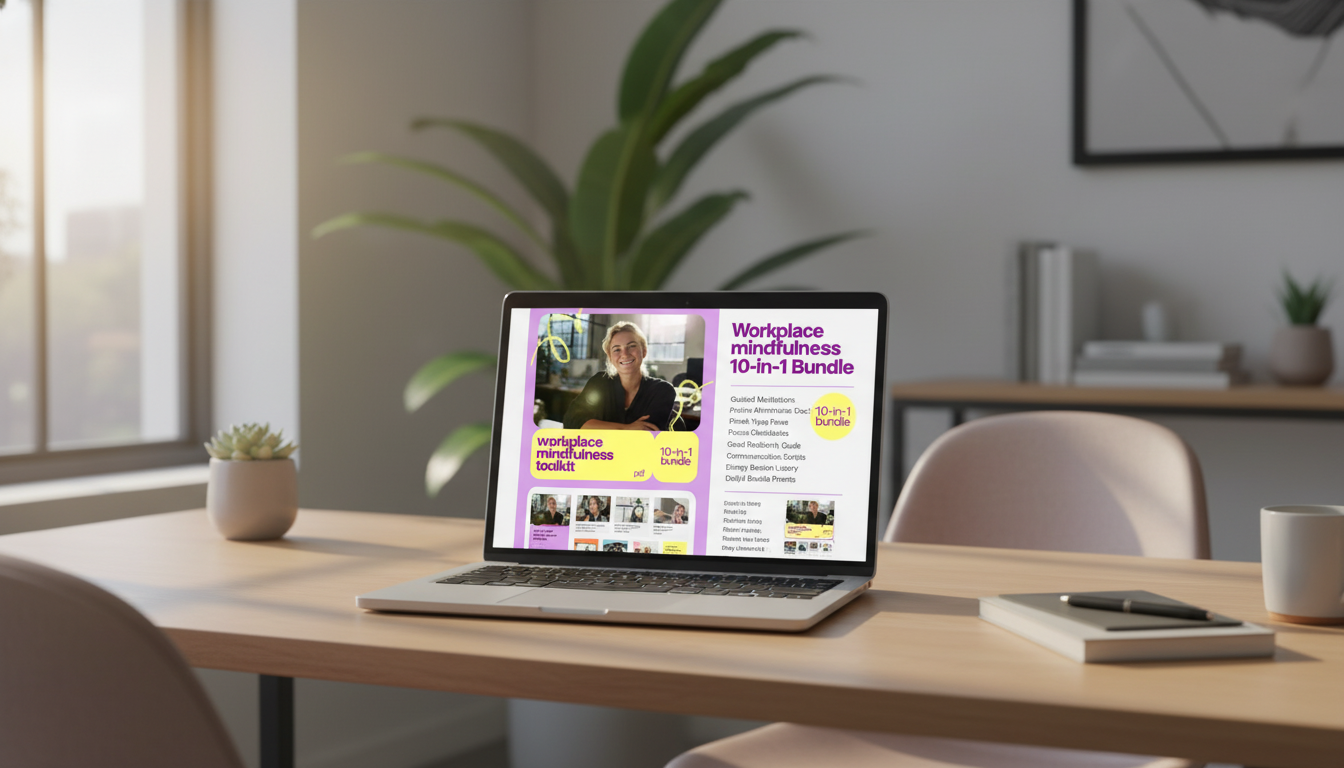
Workdays can stack pressure, distractions, and self-doubt on top of already full calendars. A practical mindfulness routine doesn’t need long meditations or a complete lifestyle overhaul—it needs simple tools that fit between meetings, before difficult conversations, and during energy slumps. This 10-in-1 Workplace Mindfulness Toolkit bundle is designed to support confidence, a steadier mood, and sustainable motivation through quick, repeatable practices that work in real office rhythms (remote or on-site).
Mindfulness is widely studied as a way to reduce stress and improve well-being, with major health organizations summarizing evidence and safety considerations for common practices. For a deeper overview, see the American Psychological Association (APA) and the National Center for Complementary and Integrative Health (NCCIH).
In practice, workplace mindfulness is less about “clearing your mind” and more about guiding it—back to what matters, back to your next step, and back to a steadier baseline after a spike in stress.
If you want a ready-to-use set of practices rather than assembling your own routine from scratch, the Workplace Mindfulness Toolkit: 10-in-1 Bundle for Confidence, Positivity & Motivation at Work is built for quick starts and repeatability.
| Work moment | Goal | Time needed | What to do next |
|---|---|---|---|
| Pre-meeting nerves | Settle body + focus | 2–4 min | Write 1 key message and 1 question |
| Midday slump | Restore energy | 3–5 min | Do a 10-minute priority sprint |
| Self-doubt spike | Rebuild confidence | 2–6 min | List 2 strengths used this week; take the smallest next action |
| Overthinking a message | Reduce rumination | 2–3 min | Draft, then step away for 60 seconds; send on return |
| After a tense call | Reset emotions | 3–7 min | Document facts + next step; avoid replaying the conversation |
The most noticeable workplace effect is often the “gap” you create—between the trigger (an email, a comment, a sudden change) and your response. That gap is where better decisions happen: clearer wording, calmer tone, and a faster return to the task you actually want to finish.
For extra structure around follow-through, pair your mindfulness routine with a simple decision checklist that reduces overthinking. The Converse vs Adidas Brand Perception Power: The Ultimate Brand Comparison Checklist can be adapted as a lightweight “choose-and-commit” template when you’re stuck comparing options and want to move forward.
Find it here: Workplace Mindfulness Toolkit: 10-in-1 Bundle for Confidence, Positivity & Motivation at Work.
Consistency matters more than duration. Even 2–10 minutes can be effective when you use it daily and match the practice to specific moments like pre-meeting nerves, conflict recovery, or a midday slump.
Yes—when the nervous system is calmer, thinking gets clearer and rumination tends to shrink. Pair that with small, repeated micro-actions (send the draft, start the first tiny step), and confidence builds through evidence that you can handle the moment.
Yes. Short, guided, practical exercises are often easier than long sessions, especially during a workday. Start with a single 2–4 minute reset and repeat it for a week before adding anything more.






Leave a comment