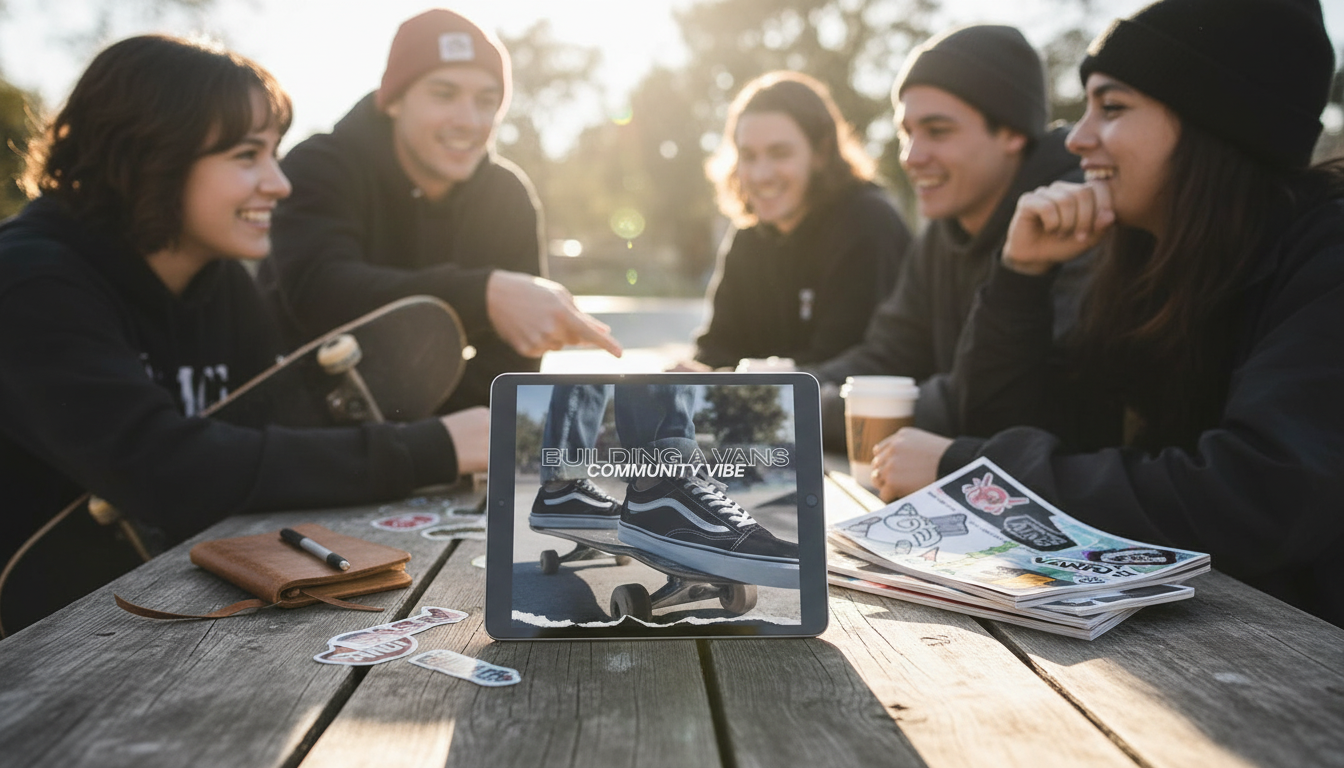
A Vans-and-skate scene feels real when people can describe it fast and recognize it instantly. Start with a one-sentence community statement that fits on a flyer: who it’s for, what happens, and what people should feel when they show up (welcomed, challenged, safe, hyped).
Next, pick three values that guide every decision—especially the awkward ones. Examples that tend to hold up at parks, street spots, and shop sessions: respect the spot, hype others up, keep it accessible. Finally, define what the community is not: no gatekeeping, no harassment, no unsafe behavior, no filming people to clown them.
Lock in a consistent name/handle and one recognizable cue people can spot from across the park: a sticker, a single color, a simple mark on posts. If you want a ready-to-use format for hosting and consistency, keep a lightweight resource on hand like Building a Vans Community Vibe Checklist | Ultimate Guide for Vans Fans and Skaters.
Most people decide within minutes whether a session feels friendly or cliquey. Make “welcome” a repeatable system, not a personality trait.
Community isn’t built on a single viral meetup. It’s built on rhythm—small moments that happen often enough to become “the thing.”
| Area | Do this every time | Do this weekly/monthly | Avoid |
|---|---|---|---|
| Skate session | Host welcomes newcomers; quick safety/etiquette reminders; celebrate attempts | Weekly anchor session; monthly themed meetup | Gatekeeping; filming without consent; ignoring beginners |
| Online group | Pin rules; introduce-new-member thread; share spot etiquette | Clip-of-the-week; meetup reminders; spotlight a local skater | Drama piling-on; doxxing; unsafe spot sharing |
| Events | Sign-in + emergency contact option; clear schedule; water and shade plan | Quarterly jam; annual community video | Overpacked heats; unclear permissions; leaving trash |
| Brand/style | Keep visuals consistent; credit creators; keep tone supportive | Sticker drop; zine or photo dump | Copying others’ work; overly negative commentary |
Online should feel like a good session: clear, welcoming, and low drama. Pick one primary home base (Discord, IG broadcast channel, group chat) and keep everything else as satellites that point back to the main hub.
Give posting a simple structure so the feed doesn’t turn into noise:
Moderation is part of the culture. Set rules, give warnings, follow through on consequences, and remove harassment fast to protect the vibe. Consent and credit are non-negotiable: ask before posting faces or clips; always tag the filmer and the skater.
Long-lasting scenes protect people and protect places. That means etiquette, accessibility, and readiness—not paranoia.
For bigger-picture support of skate spaces and youth access, check out The Skatepark Project and Skateistan. For official brand news and releases, visit the Vans Official Site.
If your crew also hosts indoor hangouts (editing nights, zine tables, shoe-custom corners), having a practical planning resource for arranging a comfortable space can help keep the flow smooth, like AI-Powered Solutions for Balanced Furniture Placement | 3-in-1 Bundle of Guides, eBooks, and Checklists.
A weekly anchor session at the same day/time builds the fastest trust, and a monthly themed meetup keeps things fresh. A reliable 60–120 minute window is usually enough to feel consistent without burning people out.
Assign a host to greet people, do quick introductions, and point out a low-pressure warm-up zone. Pair first-timers with a regular for the first 20 minutes and celebrate attempts—not just makes.
Get consent before posting, credit the filmer and skater, and enforce clear moderation rules quickly. Keep the tone supportive with recurring features like “clip of the week” and avoid mockery or call-out posting.

Leave a comment