The First-Time Puppy Owner Toolkit: A Calm, Day-by-Day Start With a New Dog
Bringing home a puppy is exciting, but the first days can feel like a blur of supplies, schedules, accidents, and questions. A structured set of guides and checklists helps turn that chaos into simple daily steps—so the puppy learns faster, the home stays safer, and routines stick from the start.
Who this toolkit helps most
- First-time puppy owners who want a clear plan for the first week and first month
- Busy households that need everyone following the same rules and schedule
- Puppies adapting to a new home, crate, and potty routine
- Owners who prefer digital downloads they can reference on a phone or print as needed
What’s inside the 4-in-1 digital download bundle
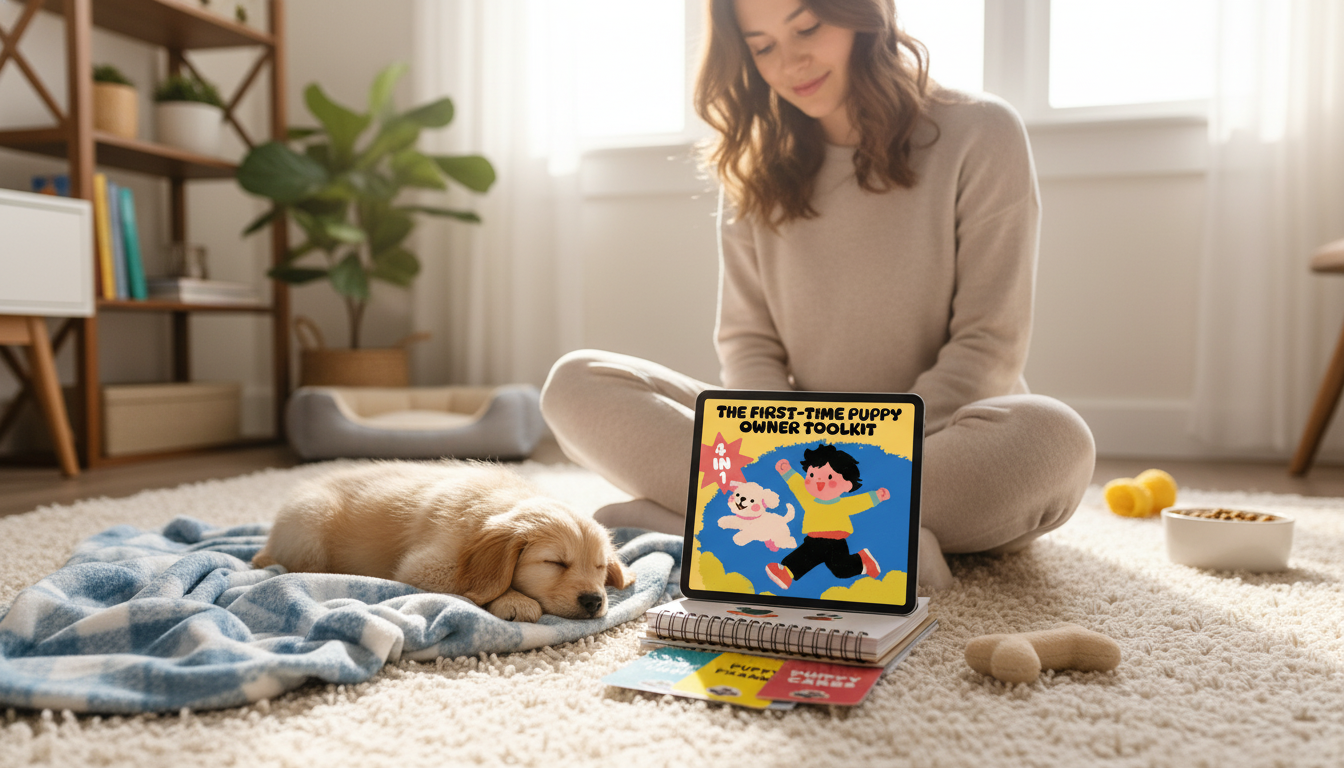
The early puppy stage gets easier when decisions are already made: where the puppy goes, what happens after waking, how long play lasts, and what to do when biting or whining starts. The The First-Time Puppy Owner Toolkit: 4-in-1 Digital Download Bundle organizes those decisions into routines you can repeat every day.
- A structured collection of guides and checklists designed to reduce guesswork in the early puppy stages
- Step-by-step routines that support house training, crate training, and early manners
- Quick-reference pages for common “what do I do right now?” moments (biting, whining, accidents, chewing)
- Printable options for fridges, binders, or puppy stations; digital access for on-the-go reminders
Bundle components at a glance
| Component |
What it supports |
Best time to use |
| Training & routines guide |
Potty schedule, crate routine, calm behaviors |
First 1–4 weeks |
| Checklists & trackers |
Consistency across family members, progress tracking |
Daily and weekly |
| Home setup & safety guidance |
Puppy-proofing, supplies, designated areas |
Before arrival and first week |
| Problem-prevention tips |
Biting/chewing, separation practice, overstimulation |
As soon as behaviors appear |
Before puppy arrives: set up the home for success
A calm start begins before pickup day. The goal is to reduce “free choice” and create obvious, safe defaults—where to rest, where to chew, and where to potty.
- Create a puppy zone: crate or pen, washable bedding, water, safe chew options, and a calm corner away from heavy traffic
- Puppy-proof at floor level: pick up cords, shoes, kids’ toys, small objects, and secure trash and laundry
- Decide house rules in advance: where the puppy sleeps, which rooms are allowed, and how visitors should greet the puppy
- Choose a potty spot and stick to it; prepare cleaning supplies for accidents (enzyme cleaner and paper towels)
- Plan the first 48 hours: fewer visitors, predictable naps, and short play sessions
If your space feels cluttered or hard to “zone,” the AI-Powered Solutions for Balanced Furniture Placement | 3-in-1 Bundle of Guides, eBooks, and Checklists can help you map a cleaner layout for puppy gates, a crate corner, and clearer walking paths—useful when you’re trying to supervise closely without tripping over obstacles.
The first 72 hours: stabilize sleep, potty, and calm time
The first three days are less about “perfect training” and more about predictable rhythm. A simple cycle reduces accidents and helps the puppy settle into your household’s pace.
- Start with a simple cycle: potty → brief play/training → food/water (as scheduled) → potty → nap
- Use frequent potty breaks: after waking, after play, after eating, and before crate time
- Keep nighttime expectations realistic: most young puppies need at least one overnight potty trip
- Reward the behaviors that matter most: going potty outside, entering the crate calmly, and settling on a mat
- Limit “free roaming” until potty training is reliable; supervision prevents accidents becoming habits
When you need basic training guardrails, the American Kennel Club’s puppy training overview is a solid reference for foundational skills and timing: AKC — Puppy Training Basics.
Building routines: crate training, house training, and daily enrichment
Routines work best when they’re small enough to repeat and clear enough that every family member does them the same way. Consistency is what teaches the puppy—not intensity.
Crate training that stays positive
- Crate training basics: short positive sessions, meals near/in the crate, and gradual increases in duration
- Use the crate for naps and calm downtime, not as a “penalty box” after normal puppy mistakes
- Pair calm entry with a tiny reward so the crate predicts good things
House training that actually sticks
- House training consistency: same door, same spot, same cue word, and immediate rewards
- Keep a simple log of times (wake, eat, play) to catch patterns before accidents happen
- If an accident happens, clean with an enzyme cleaner and reset the routine—no long lectures
Biting, chewing, and “busy puppy” moments
Health and safety guardrails to prioritize early
For what to expect at that first appointment, see: American Veterinary Medical Association (AVMA) — Puppy: First Veterinary Visit.
How to use the toolkit as a daily system (not a one-time read)
Gift-ready and household-friendly: making it work for everyone
Digital download benefits: quick access, easy updates, printable when needed
FAQ
When should a new puppy start crate training and house training?
Start on day one with very short, positive sessions. Use frequent potty breaks and reward calm crate entry and settling; increase duration gradually as your puppy succeeds.
How often should a puppy go out to potty during the first week?
Most puppies need to go out after waking, after eating or drinking, after play, and before naps or crate time—often every 1–2 hours at first. Many young puppies also need one or more overnight potty trips depending on age.
What should be printed versus kept digital from a puppy toolkit?
Print daily schedules, trackers, and a one-page household rules sheet for quick visibility. Keep longer guides digital so you can search them fast and reference them on the go.
Recommended for you






Leave a comment