
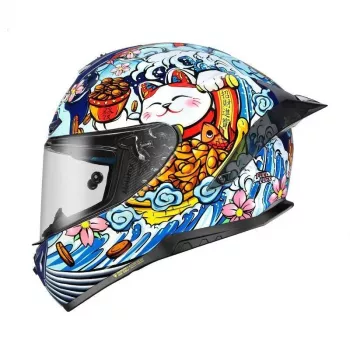
A full face helmet is built to protect the chin, jaw, and face while helping cut down on wind noise and fatigue at speed. This model pairs ECE and DOT certification with an ABS outer shell and ventilation aimed at hot-weather comfort, making it a practical pick for everyday riders who want full coverage without feeling sealed in on summer commutes.
For many riders, “everyday” means unpredictable traffic, changing weather, and a mix of speeds. Full face helmets remain a go-to because they combine wraparound protection with a stable, aerodynamic shape that’s comfortable for repeated use.
Helmet certifications don’t guarantee invincibility, but they do indicate the helmet has met defined testing requirements for impact management and retention. Two of the most commonly discussed standards are DOT (United States) and ECE (used broadly across Europe and many other regions).
| Standard | Where it’s commonly recognized | What it generally covers |
|---|---|---|
| DOT (FMVSS 218) | United States | Impact attenuation, penetration, retention system strength, labeling |
| ECE (22.05 / 22.06) | Europe and many other regions | Impact tests at defined points/speeds, retention, labeling, additional requirements (varies by revision) |
For more context on how DOT is presented for riders, see the NHTSA guidance on choosing a motorcycle helmet. For international regulation background, UNECE provides broader context at UNECE vehicle regulations.
Shell material influences how a helmet holds up to daily use—getting tossed in a top case, brushed against mirrors, or set down at a gas pump. ABS (Acrylonitrile Butadiene Styrene) is widely used because it’s tough, resilient, and practical for riders who want durability without fussy upkeep.
Hot rides can turn uncomfortable fast—especially at low speeds where airflow is limited. Summer-friendly comfort usually comes down to ventilation design, liner materials, and visor management.
Small details can make a big difference in summer. If a helmet includes a chin curtain or breath guard, it may reduce wind intrusion but can also change how moisture moves around the visor—so adjusting vents becomes even more important.
Full Face Motorcycle Helmet – ECE & DOT Certified, ABS Material, Summer Breathable, Unisex
| Feature | What it means for riding |
|---|---|
| Full face design | Chin and face coverage for commuting, touring, and higher-speed riding |
| ECE & DOT certified | Meets recognized certification requirements (confirm labels on the unit) |
| ABS shell | Tough outer shell material suited for day-to-day use |
| Summer-focused ventilation | Helps move heat and humidity out during warm-weather rides |
| Unisex fit | Sizing based on head measurement rather than gender |
DOT is a U.S. road-use standard focused on impact attenuation, penetration resistance, and retention performance, while ECE is widely recognized internationally and uses specific test protocols that vary by revision (such as 22.05 vs 22.06). Dual certification can be appealing for broader compliance, but it’s still important to confirm the certification label inside the helmet and follow local requirements.
Measure head circumference just above the eyebrows and choose the size that matches the helmet’s chart. The fit should be snug at the crown and cheeks with no painful pressure points, and the helmet should resist rotation when the strap is fastened.
Use the vents to keep air moving, and crack the visor slightly at low speeds where it’s safe and legal to do so. If the helmet supports it, a pinlock-style insert or a compatible anti-fog treatment can help, and keeping the visor clean reduces moisture buildup and haze.






Leave a comment