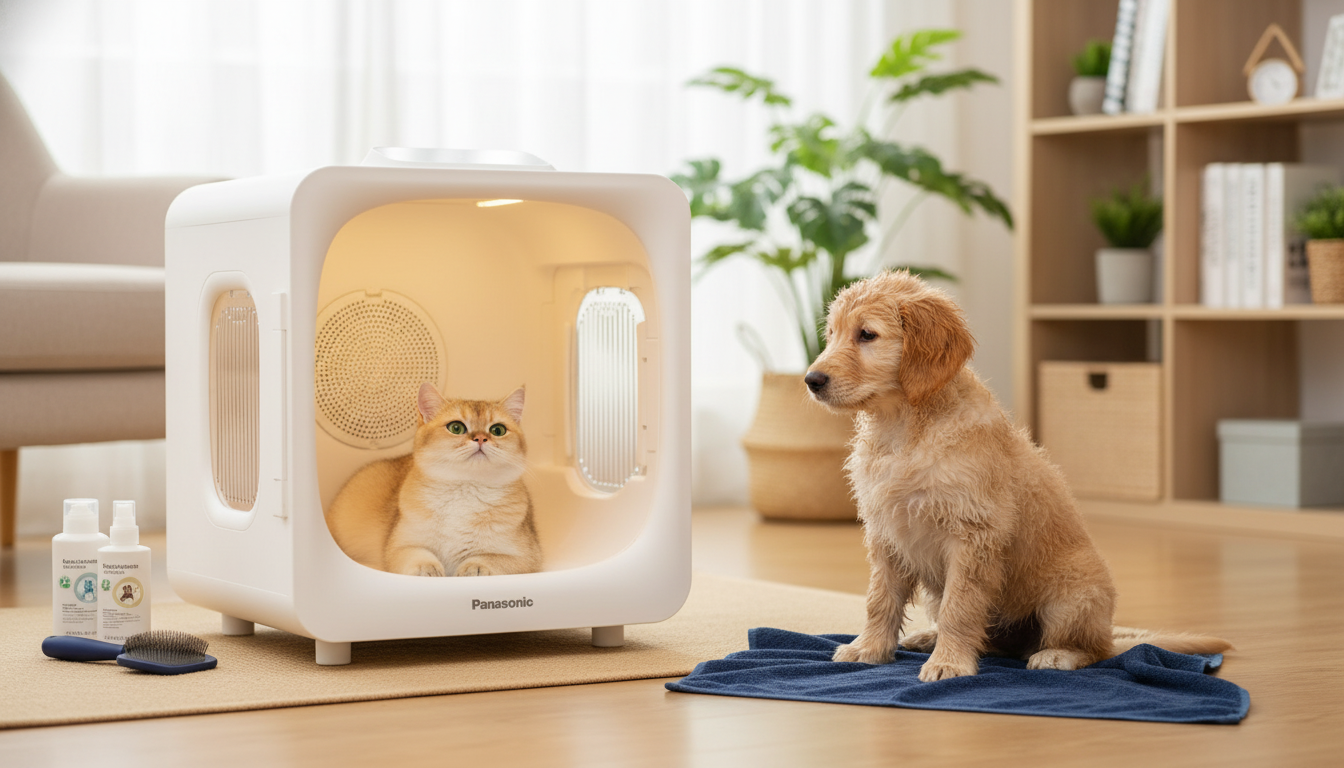
Drying a pet after a bath can be stressful: loud blowers, uneven heat, and lots of wriggling. An ultra-quiet dryer box with smart temperature control is designed to keep airflow and warmth steady while reducing noise and hands-on time. The right setup helps pets dry more comfortably, supports coat care, and makes post-bath routines easier for both cats and dogs.
A pet dryer box creates a controlled space where warm air circulates around the body, helping the coat dry more evenly than towel-only methods. Because the airflow is indirect, many pets tolerate it better than a handheld dryer pointed at their face or ears.
For coat care basics and grooming routines, reputable references like the American Kennel Club grooming guidance can be helpful. General pet health resources are also available from the American Veterinary Medical Association (AVMA).
Not all dryer boxes feel the same to a pet. The most noticeable upgrades are the ones that reduce startle responses and keep the drying environment predictable.
| Method | Noise & stress | Heat consistency | Best for | Trade-offs |
|---|---|---|---|---|
| Towel drying | Low | None | Short coats, quick wipe-downs | Often leaves undercoat damp; longer drying time |
| Handheld pet dryer | Medium to high (varies) | Depends on user technique | Targeted drying, styling | Requires hands-on time; can startle pets; uneven heat if too close |
| Dryer box with smart control | Low to medium (design-dependent) | High (regulated) | Sensitive pets, thick coats, routine grooming | Needs proper sizing and supervision; higher upfront cost |
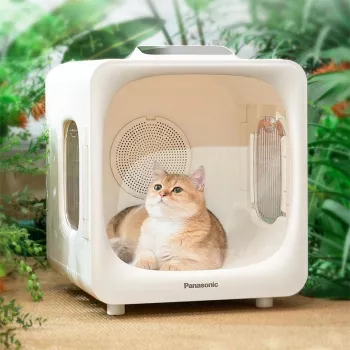
For households that bathe at home or deal with frequent wet-paw days, a regulated dryer box can make drying more consistent (and far less chaotic). The Ultra-Quiet 1100W Pet Dryer Box with Smart Temperature Control for Cats & Dogs is built around comfort-forward features that support routine use.
A dryer box works best when it’s part of a calm, repeatable routine. The goal is steady progress toward a fully dry undercoat without pushing a pet past their comfort threshold.
For cat-specific wellness references (especially when a pet is stressed or has underlying issues), consider resources from the Cornell University College of Veterinary Medicine.
Dry time depends less on breed labels and more on coat structure. A small dog with a dense undercoat can take longer than a larger short-haired dog.
A pet dryer box can be safe when used with supervision, gradual introduction, and conservative session lengths. Stable temperature control helps keep warmth consistent, but it’s still important to monitor comfort and stop if any signs of stress appear. Pets with health concerns should follow veterinary guidance.
Dry time varies based on coat length and density, how well you towel-blotted first, and even your home’s humidity. Thick undercoats usually take longer, while short coats dry faster. For anxious pets, splitting drying into multiple shorter cycles often works better than one long session.
No—best results come from towel blotting first and brushing out mats so air can reach the undercoat evenly. A dryer box is most effective as the comfortable “finish-dry” step, especially for dense coats and pets that dislike direct handheld airflow.



Leave a comment