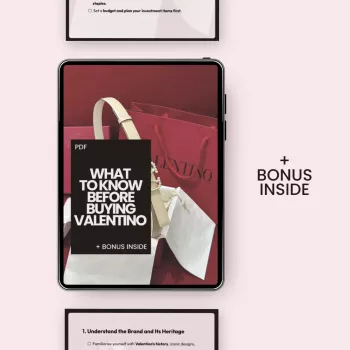
A Valentino piece can be a long-term wardrobe staple—or an expensive lesson—depending on condition, authenticity, sizing, and how well the style fits real-life wear. Whether you’re shopping new, resale, or vintage, a practical checklist helps you slow down, verify details, and buy with confidence instead of adrenaline.
Before you scroll listings or walk into a boutique, define what you’re actually shopping for. Valentino handbags, shoes, ready-to-wear, small leather goods, and accessories each come with different risk points (wear patterns, authentication tells, and repair costs).
Two items that look “almost identical” online can age very differently—or signal different price tiers—based on materials, season updates, and hardware execution.
Authenticity is rarely proven by one detail. The goal is consistency across stamps, materials, construction quality, and seller-provided documentation.
For background on how professional authentication is typically approached, see The RealReal’s designer authentication standards. For official brand references and current collections, visit the Valentino official website.
Words like “excellent” or “gently used” don’t always match what arrives. A smart approach is to evaluate the highest-wear areas first, then decide whether any flaws are cosmetic—or expensive.
| Category | What to Inspect First | Red Flags | Questions to Ask the Seller |
|---|---|---|---|
| Handbags | Corners, handles, edge paint, interior lining | Sticky coating, strong odor, peeling edge paint, misaligned hardware | Any repairs? Any corner wear? Are straps original? |
| Shoes | Soles, heel tips, toe box, insoles | Warping, separated soles, deep creasing, stretched uppers | Were soles resoled? Any slipping? True to size? |
| Ready-to-wear | Seams, underarms, hems, fabric pilling | Alterations without documentation, staining, moth damage | Any tailoring? Smoke/pet-free storage? Fabric composition label? |
| Small leather goods | Zippers, snap closures, card slots, edges | Loose snaps, stretched slots, peeling coating | Does zipper run smoothly? Any cracking at folds? |
For a compact version you can keep on your phone during boutique visits or resale browsing, use our internal digital guide: What to Know Before Buying Valentino – Luxury Designer Checklist (Digital Download). It’s designed for quick comparisons across listings—authenticity details, condition grading, sizing notes, and value checks—so your process stays consistent when the listing is tempting.
If you also enjoy a more intentional approach to styling and space planning at home, you may like: AI-Powered Solutions for Balanced Furniture Placement | 3-in-1 Bundle of Guides, eBooks, and Checklists.
Start with seller credibility and buyer protection, then request clear close-ups of stamps/engraving, stitching, hardware alignment, and the highest-wear areas. Confirm return terms in writing before paying so you have a realistic path if the item differs from the listing.
It depends on the style and material, so rely on measurements instead of the size label. Ask for insole length and width notes, plus whether the leather has stretched with wear, then compare to a pair you already know fits well.
An original receipt or boutique invoice is the strongest support. Dust bags and packaging help, but consistent construction and markings matter more; for high-value items or unclear details, third-party authentication is a smart extra step.



Leave a comment