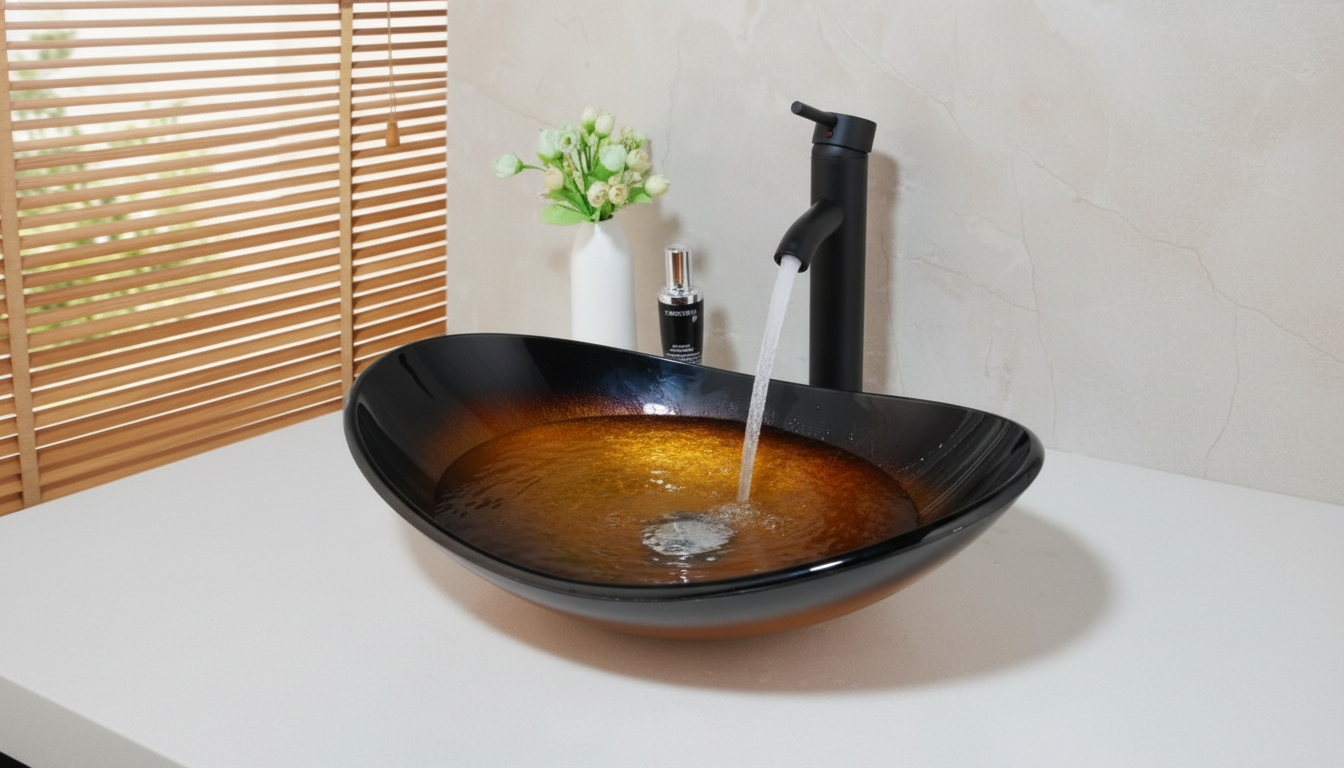
A waterfall spout paired with a glass basin look can make a bathroom feel more architectural without changing the entire vanity. The combination is bold, modern, and intentionally “seen”—the water stream becomes part of the visual experience. This guide covers what to expect from a modern black waterfall glass basin faucet with a pop-up drain, how to confirm it will fit common vessel-sink setups, and the simple habits that keep the finish and waterfall sheet looking clean and consistent.
Unlike an aerated faucet that focuses on utility, a waterfall spout creates a wider, sheet-like stream that reads like a design feature. With a transparent or tinted glass basin, that sheet remains visually distinct, so the faucet doesn’t disappear into the background—it becomes a focal point.
Matte black finishes add crisp contrast against clear glass, bright white countertops, or pale stone surfaces. The key is proportion: waterfall faucets look best when the spout height and reach land the stream near the basin’s center. When the water hits too close to the rim or back edge, splashing increases and the basin can feel cramped during daily handwashing.
Most sets include the faucet body with a waterfall spout, a matching pop-up drain, and mounting hardware. Before ordering, confirm a few compatibility details that can prevent last-minute trips for extra parts.
| Item to Check | Why It Matters | What to Measure/Verify |
|---|---|---|
| Mounting style | Ensures compatibility with the vanity/top | Deck-mount hole count and spacing (single-hole vs. multi-hole) |
| Spout height | Controls clearance above the basin rim | Distance from countertop to spout outlet |
| Spout reach | Reduces splash and improves handwashing comfort | Outlet position relative to basin center |
| Drain type | Prevents leaks and fit issues | Drain diameter and overflow/no-overflow compatibility |
| Water pressure | Affects waterfall sheet quality | Home pressure and any local flow restrictions |
| Finish care | Maintains appearance over time | Cleaning products safe for matte black finishes |
Vessel basins sit above the counter, so faucet height becomes more critical than it is with undermount or drop-in sinks. A common goal is simple: the stream should fall near the drain area. That placement tends to minimize splash, keeps the water away from the outer walls, and makes handwashing feel natural.
If the spout reach is too short, the stream can hit the back slope of the bowl and bounce forward. If the spout is too tall for a shallow vessel, the falling water gains speed and can spray outward. When selecting a faucet for a specific basin, treat height and reach as a matched pair rather than independent numbers.
Also confirm countertop thickness and mounting hardware compatibility. A stable, properly clamped base keeps the faucet aligned, reduces seal stress, and prevents small shifts that can show up as uneven stream placement over time.
Waterfall spouts deliver a broader stream, so the sound profile can be different from an aerated faucet. Basin depth, bowl shape, and water pressure all influence how “loud” the flow feels. In many bathrooms the sound is part of the spa-like effect; in others, it may be more noticeable during early mornings.
If splashing shows up, the most reliable fixes are mechanical, not cosmetic:
Hard water can gradually disrupt the smooth “sheet” effect by leaving mineral deposits near the outlet lip. A quick wipe-down after use helps preserve an even flow and keeps the waterfall edge looking crisp.
For performance and efficiency guidance, it can help to reference programs and standards from authoritative organizations like EPA WaterSense and certification bodies such as IAPMO.
They can if the basin is shallow or the spout is too high or too short in reach. Splash is mainly controlled by matching spout height and reach to basin depth and keeping the stream aimed near the drain.
Usually yes, but confirm whether the basin has an overflow hole and choose a drain intended for overflow-free vessel sinks when needed. Use the correct gaskets and avoid overtightening to protect the glass.
Use mild soap and water with a soft cloth, rinse, and dry. Avoid abrasive scrubbers and harsh chemical cleaners to help protect the finish.






Leave a comment